
Interlock (smooth double-knit)
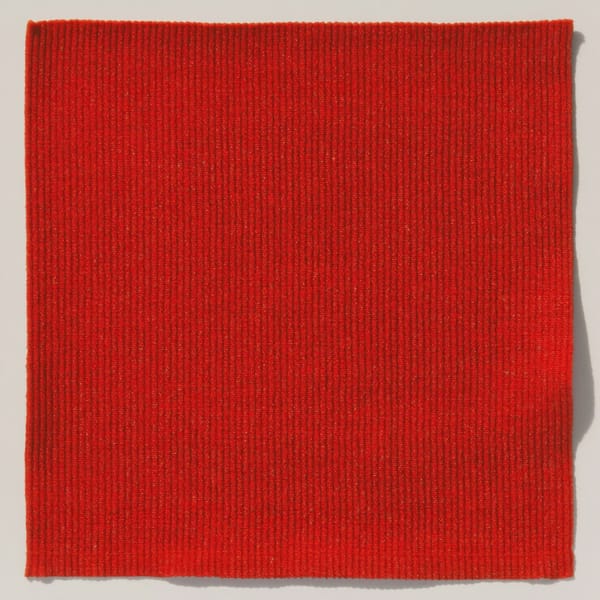
| Weight | 250–500 g/m² (7.4–14.7 oz/yd²) In family: 150–500 g/m² · 3 fabrics |
|---|---|
| Composition | 100% polyester (common); elastane-free — stretch comes from the structure. |
| Knit type | Interlock (smooth double-knit) · Rib |
| Use class | Everyday |
| Stretch | Mechanical stretch |
| Knit | A double-knit where two 1x1 ribs interlock on opposed needles; identical, smooth faces; edges don’t curl. |
| Hand | Both faces identical, even and smooth; fuller, more stable and more draping than rib. |
| Typical use | Innerwear · smooth tees/tops · outer-layer linings |
| Strength | A double-knit giving high dimensional stability, even twin faces and better recovery than plain rib. |
| Watch for | Stretches notably less than rib; it is a smooth-faced double-knit (not ribbed) and is less suited to tight binding than rib. Same structure as the Interlock family. |
Width, gauge, finishing options and test standards are shared on request.
Typical technical ranges
| Weight tolerance | ±5% (typical); ±5–7% may apply on heavy/dense rib and elastane-blended variants |
|---|---|
| Width | Fersan standard: 160 cm open width (owner-declared, 2026-09-03). Structural reference: relaxed open width typically ~70–190 cm; tubular width typically 30–90 cm (Ø). Because rib contracts strongly widthwise, the relaxed width is markedly narrower than off-machine width and is highly sensitive to relax/tension state at measurement |
| Shrinkage (wash) | Post-wash typically ±5% in length/width (length may show a small positive growth). Due to widthwise recovery, rib can show higher dimensional change in WIDTH than single-jersey; under-set goods may reach −6 to −7% in width, while good heat-setting brings it toward ±3% |
| Color fastness | Wash ≥4, rubbing (dry) ≥4 / (wet) ≥3–4, light ≥4–5 (grey/blue scale, min). Typically good for disperse-dyed PES; on dark/bright shades wet rub may sit at the lower bound due to sublimation/migration |
| Abrasion / pilling | Martindale typically ~20,000–40,000+ cycles; pilling typically grade 3–4 / 4 (ISO 12945), dropping toward 3 on textured/bulky yarn. Plain rib face pills relatively well; textured/bulky yarn or surface fuzz pushes it toward the lower bound |
| Gauge / yarn | Typical machine gauge E14–E24 (coarse cuff/collar rib E14–E18; standard cuff/collar rib E18–E22; fine sport rib up to E24). Yarn typically 75–150 denier PES (DTY textured), 50–75 denier on finer builds; elastane variant adds ~20–40 denier spandex |
These ranges are industry-TYPICAL / indicative values based on construction and fiber, not Fersan’s binding QC measurements. Exact values are confirmed per order, approved sample and lot-based QC report.
Trade & dispatch
| HS heading | 6006.32 — Other knitted fabric, of synthetic fibres, dyedUnbleached or bleached shipments: 6006.31 |
|---|---|
| Origin | Turkey — Çorlu, Tekirdağ |
| Packaging | Rolls wound on a cardboard core in a PE bag; roll size planned around container fill |
| Shipping documents | Commercial invoice · packing list · A.TR movement certificate · transport document |
| Delivery terms | EXW · FOB · DAP — shipping plan confirmed with your quotation |
The HS heading is indicative; final classification is made by the customs broker based on the sample’s composition, width and finish.
Related reading: Scuba Fabric: How It Differs from Ponte and Neoprene, and the Weight Map · Rib, Interlock and Ponte: Choosing the Right Double-Face Knit · Naming in Polyester Knits: When One Fabric Has Many Names · Knit Defects: Spirality, Barré and Holes — Root Cause and Control
Related calculators: Knit weight calculator: loop length to estimated GSM · Yarn consumption per fabric calculator · Waste & Efficiency Calculator — Required Input Quantity
Programmes we use this fabric in: Polyester Interlock (Double Knit) Fabric Manufacturer — Turkey · Polyester Rib Fabric Manufacturer — Turkey · Underwear and Loungewear Fabrics
Other fabrics in the same family: Polyester Rib Knit (1x1 / 2x2) 150–350 · Polyester Rib Knit with Elastane 180–380
Frequently asked questions
What weight range is Interlock (smooth double-knit) produced in?
250–500 g/m² (7.4–14.7 oz/yd²). In family: 150–500 g/m². Weight, composition and color options are defined per request; contact us for samples. The weight ranges are Fersan’s production window; exact figures are confirmed by order and approved sample.
What is Interlock (smooth double-knit) made of and how is it knitted?
100% polyester (common); elastane-free — stretch comes from the structure. A double-knit where two 1x1 ribs interlock on opposed needles; identical, smooth faces; edges don’t curl.
What is Interlock (smooth double-knit) used for?
Innerwear · smooth tees/tops · outer-layer linings. A double-knit giving high dimensional stability, even twin faces and better recovery than plain rib. Stretches notably less than rib; it is a smooth-faced double-knit (not ribbed) and is less suited to tight binding than rib. Same structure as the Interlock family.
What are the minimum order, lead time and delivery terms?
Minimum order (MOQ): 500–1,000 kg per colour — varies by fabric · Lead time: Typically 3–4 weeks from order confirmation to dispatch · Sampling: Sampling terms are set per project and metreage; it begins after a short technical consultation · Response time: Quotation requests answered within 2 business days · Delivery terms: EXW · FOB · DAP — shipping plan confirmed with your quotation.