Alongside strictly necessary cookies, we use functional and analytics cookies only with your consent. You can choose your preferences and change them any time. Cookie Policy
Cookie preferences
Manage each category separately. Strictly necessary cookies are required for the site to work and cannot be turned off.
NecessaryAlways on
Required for the site’s core functions, security and remembering your cookie preference — including form security (hCaptcha). No consent required.
Functional
Displays embedded content such as Google Maps. When off, the map does not load until you click “Show map”.
Analytics
Helps us improve the site by measuring visit statistics. Currently inactive; when enabled it runs only with your consent.
From T-shirts to winter outerwear — we make ten polyester knit families and 42 fabrics, yet they all grow from a few basic structural decisions. Move the lens across the cloth: see single jersey’s one face, rib’s 1×1 wales and interlock’s locked double bed, stitch by stitch.
Glide the pointer · click to send the lensTap to move the lens · drag the handle
Knit microscope: a lens travels across three fabric strips — single jersey, rib and interlock — drawing each structure’s stitch geometry as a technical schematic. The chip reads the family name, trade term and typical weight band; the three buttons below send the lens to each strip.
10 polyester knit families across 60–500 g/m²: mesh/net 70–250 (jerseys, lining, spacer); performance/technical 85–250 (dry-fit, microfiber, jersey); single jersey 80–350 (tees, innerwear, French terry); rib 150–500 (collars, cuffs, trims); piqué 100–370 (polos, golf); interlock 80–400 (jerseys, polos, ponte); two-thread French terry 150–350 (sweatshirts, hoodies); three-thread fleece 200–350 (winter sweats); fleece 100–400 (winter outerwear, lining); raschel/warp knit 60–500 (tulle, net, power-net). The catalogue below lists each of the 10 families’ 42 fabrics.
01The weight spectrum
The weight axis: light to heavy.
Each fabric sits within its own g/m² range. Weight is tuned to your request.
The most basic single-face knit family, made on single-bed circular machines: a flat knit face and a loop-back reverse. Polyester single jersey is a light, fast-drying, moisture-transporting base; the same structure gains weight and stretch through its elastane (with-spandex) and loop-back (French terry) derivatives.
01
Polyester Single Jersey
Single jersey
80–200 g/m²
Mechanical stretch
Composition
100% polyester (PES); combed/ring yarn by quality, recycled (rPET) version available.
Knit
Single-feed, single-bed circular knit; a flat face and a loop-back reverse.
Hand
Light, fine and fluid; smooth face, lightly textured back; soft, low stretch.
Use
T-shirts · innerwear · jerseys
Strength
The economical single-face base — light, fast-drying and the best surface for sublimation.
Watch for
Single-face edges curl; opacity is weak at low weights.
A knit family whose surface carries a honeycomb / bird’s-eye relief formed by combining knit and tuck stitches. The raised cells open air channels, which makes piqué the classic choice for polo shirts and light sportswear. Polyester versions stand out for moisture management, shape retention and sublimation suitability; cell size (standard/mini), elastane and jacquard variants diversify the family.
01
Polyester Piqué
Piqué
150–280 g/m²
Mechanical stretch
Composition
100% polyester (typical); microfilament yarn for sublimation lustre.
Knit
Knit + tuck honeycomb (bird’s-eye) cells on a single-jersey or interlock base.
Hand
Textured, grainy; cooler than cotton piqué, medium body, holds a structured shape.
Use
Polo shirts · corporate/promo · golf tops
Strength
The classic polo cloth — shape-holding, fast-drying and very print-friendly.
Watch for
Less breathable than cotton piqué; sensitive to direct heat.
A knit family made on opposed needles that forms pronounced vertical channels (ribs) on both faces. The structure gives strong crosswise stretch and natural recovery, which is why it is chosen for collars, cuffs, waistbands and other body-hugging zones. The family includes plain rib, elastane-boosted rib and a smooth-faced double-knit (interlock) variant.
01
Polyester Rib Knit (1x1 / 2x2)
Rib (1x1 / 2x2)
150–350 g/m²
Mechanical stretch
Composition
100% polyester (elastane-free); stretch comes from the structure.
Knit
A 1x1 or 2x2 rib produced on opposed needle rows; pronounced vertical channels on both faces, a reversible double-face fabric.
Hand
Clear vertical channels, full and springy; compresses and opens crosswise, self-recovering; edges don’t curl.
Use
Collar/cuff/waistband trims · hem & cuff ribbing · ribbed tops
Strength
A non-curling channelled structure that hugs the body with high crosswise stretch and natural recovery.
Watch for
Without elastane, heavy weights can slacken over repeated stretching; lengthwise stretch is low.
A double-knit giving high dimensional stability, even twin faces and better recovery than plain rib.
Watch for
Stretches notably less than rib; it is a smooth-faced double-knit (not ribbed) and is less suited to tight binding than rib. Same structure as the Interlock family.
A double-face knit family made on double-bed machines, where two rib structures interlock on opposed/offset needles. The faces are identical, smooth and non-curling; tighter, more opaque and more stable than single jersey. The family covers plain interlock, elastane (stretch) interlock, a heavier Ponte di Roma double-knit and smooth four-way-stretch scuba.
Polyester-led; most qualities carry ~3–8% elastane. Market ponte is often rayon/poly-elastane; this file takes a polyester+elastane base.
Knit
A single, thick, stable double-face fabric knit on a double bed with a knit + tuck/miss repeat (Ponte / Punto di Roma); carries a subtle horizontal rib — not two layers bonded together.
Hand
Full, bodied and firm; both faces smooth and identical; thicker than standard interlock, holds its shape better.
Polyester base + elastane; typically 5–10% elastane (roughly 90–95% polyester). THERE IS NO FOAM CORE: this is a single-piece knitted scuba. The bonded fabric-foam-fabric “neoprene-look” version is a lamination product and is not part of this programme.
Knit
A smooth double-face fabric knit on a double bed in a dense loop arrangement, with elastane fed into the structure. Ponte’s faint horizontal rib is absent here; the body comes from the knit itself, not from a bonded layer.
Hand
Full yet springy; a smooth, matte, non-slippery face. It pushes back slightly under pressure and snaps back after stretch. The pebbled-face cloth sold as “scuba crepe” is a SEPARATE quality and usually lighter; this item is the smooth-faced one.
Use
Structured dresses/skirts/blazers · bodysuits and shapewear panels · sport-fusion tops
Strength
A smooth, four-way-stretch body that takes shape from the pattern and holds it — the base for precise, seam-driven design.
Watch for
The high elastane share is heat-sensitive — keep iron and press temperatures low. Drape is limited at heavy weights and it is not for light summer pieces. Often confused with ponte: ponte is more stable and two-way, scuba springier and four-way.
The same base as scuba: polyester with typically 5–10% elastane. The difference is not in the composition but in the FINISH; there is no foam core here either.
Knit
The scuba base finished by embossing: heat and pressure give the face a regular blistered, three-dimensional pattern. The knit is unchanged; the surface is what changes.
Hand
Full and voluminous; the blisters are felt under the finger. A matte face that plays with shadow — at the same weight it reads richer than flat scuba.
Use
Structured jackets and dresses · outer face of bags and accessories · decorative panels
Strength
It adds volume to the surface without adding weight — a richer texture at the same grammage.
Watch for
The embossing can flatten under high heat and pressure, so ironing and pressing must stay low. The thickness difference at the blister peaks calls for care in cutting and sewing.
The same base as scuba: polyester with typically 5–10% elastane. The suede look comes from the surface finish, not from the yarn.
Knit
The scuba base finished by emerising/sueding: surface filaments are opened into a short, dense, matte pile. The knit stays the same; the face becomes suede.
Hand
Velvety, dry and matte; a hand passed across it leaves a mark that returns. It gives the suede look while keeping the stretch of a knit.
Use
Dresses and jackets · the face of shoes and bags · interior upholstery panels
Strength
It delivers the leather-suede look together with the comfort, stretch and sewing ease of a knit.
Watch for
The sueded surface can polish over time under heavy abrasion; on deep shades wet rub fastness should be checked separately.
Highlights
Suede appearance with knit stretch
A matte face that softens light and does not glare
Technically a loop-back knit: a fine ground yarn plus a thicker loop yarn; a flat face and an uncut-loop (terry) reverse. Heavier than single jersey, lighter than three-thread fleece — the classic cloth of sweatshirts, hoodies and joggers. Polyester versions add fast drying and stability, while brushing, elastane and melange yarn differentiate warmth, stretch and look.
01
Polyester French Terry
French terry (two-thread loop-back)
150–320 g/m²
Mechanical stretch
Composition
100% polyester (fine ground + ~2× thicker loop yarn); cotton-PES is common in the market, pure/high-PES applies for a polyester specialist.
Knit
A loop-back knit on a single-bed machine: the ground yarn makes the flat face, the thick loop yarn the uncut loops on the reverse.
Made on single-bed machines by knitting three yarn systems together — ground, laid-in (fleece) and binder — producing a fuller, thicker, firmer family than two-thread terry. The face looks like single jersey; the back can be left unbrushed or napped (brushed). The core winter cloth of sweatshirts and joggers. Note: three-thread fleece is classically made in cotton/cotton-PES; this file takes Fersan’s polyester version.
01
Three-thread Fleece (polyester)
Three-thread fleece
200–330 g/m²
No stretch
Composition
Polyester-led (ground + fleece + binder). Three-thread is classically cotton/cotton-PES (CVC); the 100% polyester version exists but is less common.
Knit
A three-thread knit using miss, tuck and knit on a single-bed machine; jersey face, with the fleece yarn anchored by the binder on the back.
Hand
Markedly thicker, fuller and firmer than two-thread; flat-matte face, heavy and structured drape.
A polyester family that delivers high air permeability through holes deliberately opened in the knit; it varies sharply by hole size, technique (knit-tuck, jacquard) and number of layers — a coarse sports net and a very fine air mesh are not the same thing. The polyester base adds moisture management, fast drying and colourfastness; stretch is mostly mechanical, with elastane needed for true recovery.
01
Sports Net / Eyelet Mesh
Sports net / eyelet mesh
100–170 g/m²
Mechanical stretch
Mesh / open
Composition
100% polyester (mechanical give) or, for real stretch, a ~88–92% PES / 8–12% elastane variant.
Knit
An open net knit on a circular weft machine in a porous/eyelet pattern, forming clear, even holes.
Hand
Light, dry and airy; the holes are felt, loose-fluid drape, doesn’t cling.
Use
Football/basketball jerseys · sport shorts · vent panels
Strength
The benchmark for high-tempo sportswear needing maximum airflow and lightness.
Watch for
Large holes reduce coverage (a lining may be needed); big openings are prone to snagging/laddering.
100% polyester (durable monofilament polyester in the core); some versions use PES/elastane on the faces.
Knit
A three-layer sandwich (spacer) where two knit faces are joined by vertically knitted monofilament polyester pile yarns; an air gap forms in the middle.
Hand
Thick, full and sponge-like/springy; firm-balanced, low-stretch, stands upright.
Use
Padded sport panels/outerwear details · shoe uppers/padding · backpack back panels
Strength
Breathable cushioning without foam — it unites structure, padding and airflow in one fabric.
Watch for
Heavy and bulky; low in-plane stretch — recovery comes mostly from compression/loft; not for thin, fluid-draping garments.
A napped, insulating family made by knitting 100% polyester yarn and brushing one or both faces. The air pockets of the napped surface trap heat; it is warm despite being light, and dries fast. Differences within the family come from weight (micro/200/300 tiers), fibre fineness, one- or two-sided brushing and anti-pill finishing.
01
Polar Fleece
Polar fleece
180–400 g/m²
Mechanical stretch
Composition
100% polyester (recycled rPET versions common).
Knit
After the circular-knit ground, the face(s) are raised and sheared on a brushing machine; usually double-brushed, soft napped texture.
Hand
Soft, napped, lofty; a raised, warm-feeling surface, medium-soft drape.
With equally soft faces it needs no extra lining and keeps a consistent look in reversible designs.
Watch for
Standard fleece is usually double-brushed too; “double-faced” mainly denotes a deliberately balanced/finished nap on both sides. Both napped faces double the pilling-prone area (anti-pill recommended).
A set of polyester performance knits foregrounding moisture management, fast drying, durability and dimensional stability. The same raw material (polyester filament) gives very different function across knit and yarn fineness — from flat single jersey to double-knit interlock, from wicking dry-fit to a microfiber surface. This family gathers the performance-tuned (yarn + finish) cousins of structures found in the other families.
01
Single Jersey (Polyester)
Single jersey (performance)
120–200 g/m²
Mechanical stretch
Composition
100% polyester single-knit; cotton/elastane blends exist, but pure PES is the most common sport variant.
Knit
A single-bed single-jersey knit; flat V-stitch face, loop-rib back (asymmetric).
Hand
Fine, fluid and elastic; soft and light; smooth, draping.
Use
Tees · tanks · light sport tops · jersey linings
Strength
The base of high-volume sport/promo basics — light, fast-drying and economical to make.
Watch for
Edges curl; without elastane pure PES has no permanent structural stretch; opacity is low at light weights. Same structure as the Single Jersey family (performance-tuned by yarn/finish).
Mostly 100% polyester; often ~80–90% PES / 10–20% elastane (with-spandex) for stretch and fit.
Knit
A functional knit engineered for sweat transport (not flat jersey; usually piqué, micro-mesh or channelled interlock); moves sweat to the outer face by capillary action, usually backed by a wicking finish.
Hand
Dry, light, napless; doesn’t cling even when wet; lightly textured by structure.
Use
Training/running tees · sport tanks · performance polos · jerseys · leggings-shorts (with elastane)
Strength
Pulls sweat off the skin and evaporates it fast to stay dry and cool in intense activity — a clear edge over cotton.
Watch for
Wicking depends heavily on knit and finish; a finish-free “dry fit” claim may not match real performance. Pure PES can hold odour more than cotton. Pure PES stretches mechanically; the 10–20% elastane version is truly elastic.
Microfilament fineness gives unique softness and moisture spreading over a wide surface — a near-luxury touch.
Watch for
Fine filament raises abrasion and heat/iron sensitivity; dense builds reduce breathability in some versions. “Microfiber” is only correct for <1 dpf filament.
Highlights
Silky/peach-skin hand
High filament surface area → good moisture spreading
Light, fast drying
Dense build: wind-resistant, smooth print face (traded off against breathability)
100% polyester double-knit; cotton and elastane blends also exist.
Knit
A double-knit where both faces’ loops interlock on two needle beds; identical faces (symmetric), flat, smooth.
Hand
Fuller, more stable and opaque than single jersey; both faces smooth, draping but bodied; no curling.
Use
Polos/tees · sport tops/joggers · fitted dresses · babywear
Strength
A double-knit that is more stable, opaque and durable than single jersey — both faces usable.
Watch for
Thicker/heavier than jersey at equal weight; not ideal for very thin summer pieces; stretch (elastane-free) is more limited than jersey. Same structure as the Interlock family.
Raschel knitting is a warp-knitting technique in which the yarns are looped in the vertical warp direction; it is technically a different route from the circular/weft knitting behind the “Mesh & Net” family on this site. The structure suits open-pore, structural fabrics such as tulle, athletic mesh/power-mesh, eyelet, jacquard and elastane power net. We run this work in a dedicated warp-knitting park, separate from our circular-knit line, and we are cited as a reference in this area. In short, this family is the warp-knit sibling of the weft-knit Mesh & Net family — building the same open structure by a different technique.
01
Athletic Mesh (Raschel)
Athletic mesh (warp knit)
160–230 g/m²
Mechanical stretch
Mesh / open
Composition
100% polyester (PES); elastane-free mechanical give. A ~88–92% PES / 8–12% elastane variant can be knitted for light recovery when needed.
Knit
An open mesh built by warp knitting on a Raschel machine: unlike weft/circular knitting, the yarns loop in the vertical warp direction, which yields a holed structure that resists curling at the edges, won’t ladder and stays dimensionally stable. Not to be confused with the weft-knit Athletic Mesh in our catalogue — though similar in look, it is a technically different knit family.
Hand
Light, dry and airy; the pores are clearly felt, the structure holds its form more firmly than weft mesh, and it doesn’t cling to the skin.
Use
Sport tops/lining · footwear & bag mesh · inner lining
Strength
Its warp-knit structure pairs high airflow with resistance to laddering and edge curl, holding its shape under use.
Watch for
Elastane-free mechanical stretch is limited; close-fitting cuts that need true recovery call for the elastane variant.
100% polyester (PES); knitted from fine filament yarn, with no elastane for stretch (an optional elastane variant is a separate construction).
Knit
A warp-knitted tulle made on a Raschel machine: the yarns loop in the vertical warp direction to form an open, non-slip net. This differs technically from the site’s mesh family — that family is a weft (circular) knit, whereas tulle is built in the warp direction, so its pores are even and its edges resist running.
Hand
Very light and fine; sheer to semi-sheer, paper-thin yet tear-resistant; a dry, crisp hand with almost no stretch.
100% polyester (PES); mechanical give. An elastane variant can be knitted when fit and recovery are required.
Knit
A Raschel warp-knit fabric, where yarns are looped in the vertical warp direction; regular eyelet/hole rows deliberately opened into the pattern give a textured, breathable surface. This is technically different from the Mesh & Net family on the site — that family is weft (circular) knit, whereas this structure runs in the warp direction, so the holes are more stable and more resistant to snagging and laddering.
Hand
Mid-weight, structured and airy; the holes are felt by hand and the surface is raised; stable in the warp direction, with a bodied rather than loose drape.
100% polyester (PES); matt or bright filament by warp-yarn quality, with a recycled (rPET) variant also possible.
Knit
A warp-knitted surface made on a Raschel machine; the yarns loop vertically along the warp direction in parallel, not across the width. A jacquard mechanism selects needles to the pattern, building geometric/decorative relief motifs straight into the ground. This is technically different from the site’s Mesh & Net family, which is circular weft knitting — Raschel is produced on a warp-knitting machine.
Hand
Structured and consistent; a stable, low-stretch surface with light relief that follows the density of the jacquard motif. The hand is less slippery and more dimensionally stable than weft knits.
Use
Decorative outerwear · curtains and home textiles · structured panels
Strength
A structured base that knits the pattern straight into the warp, offering high dimensional stability and a decorative relief surface.
Watch for
The warp-knit structure has little stretch and is unsuitable for fitted, stretchy pieces; since the pattern is set up on the machine per customer request, it requires a minimum production run.
Highlights
The pattern is knitted in, not printed
Warp structure: high dimensional stability, low laddering
Polyester-based: ~72–82% polyester / 18–28% elastane (spandex); the elastane ratio is tuned to the support level.
Knit
Made on a Raschel warp-knitting machine: yarns are looped in the vertical warp direction with elastane bound in on every course. This is technically different from the site’s mesh & net family (which is weft/circular knit); warp knitting gives power net high dimensional stability and run resistance.
Hand
Firm, full and recovering; smooth flat surface with a clear support feel; stretches 4-way and snaps back strongly.
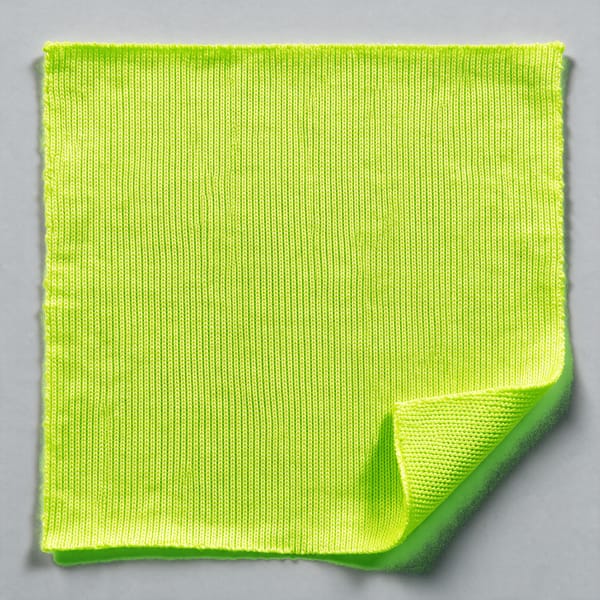
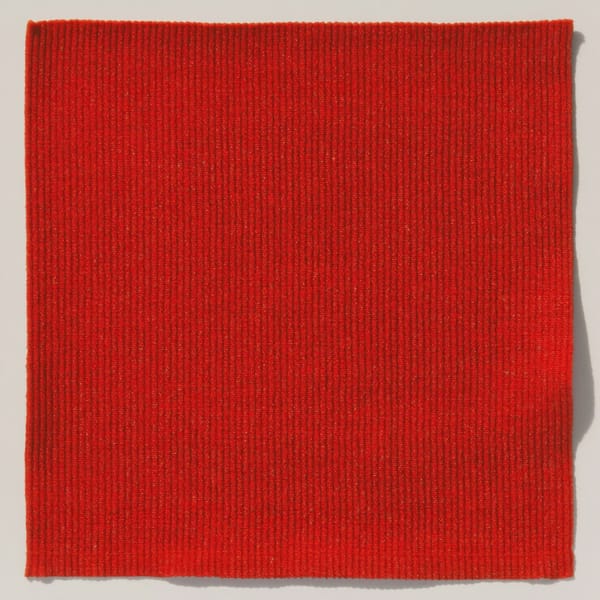
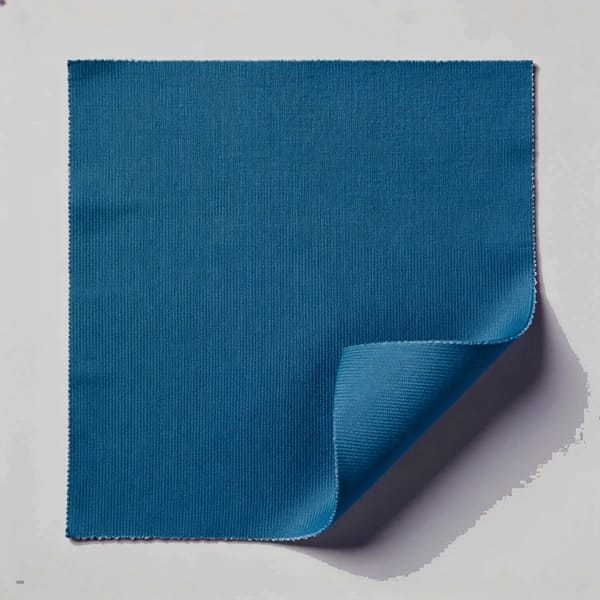
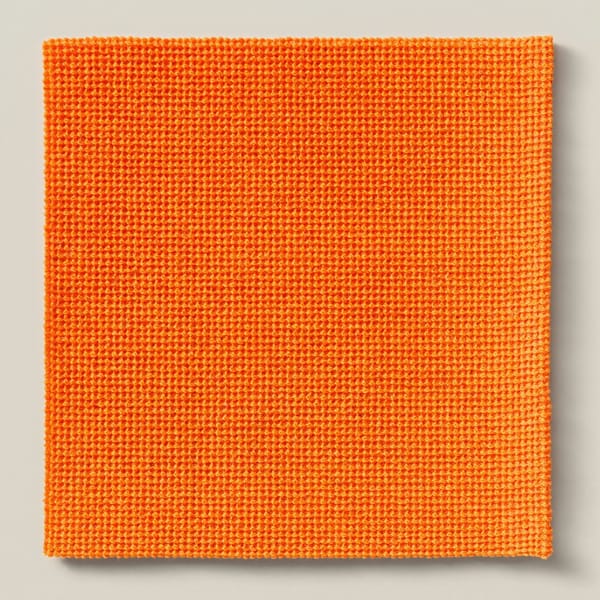
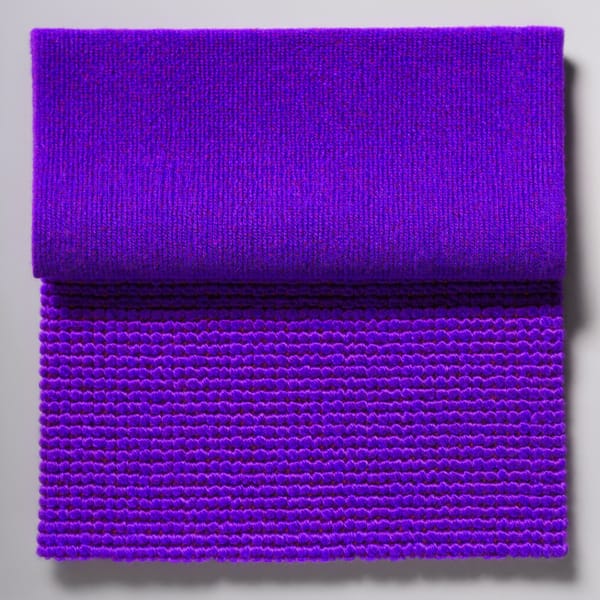
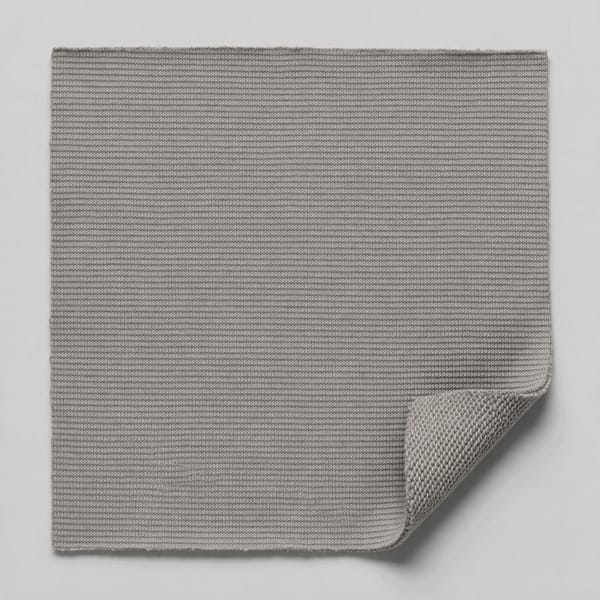
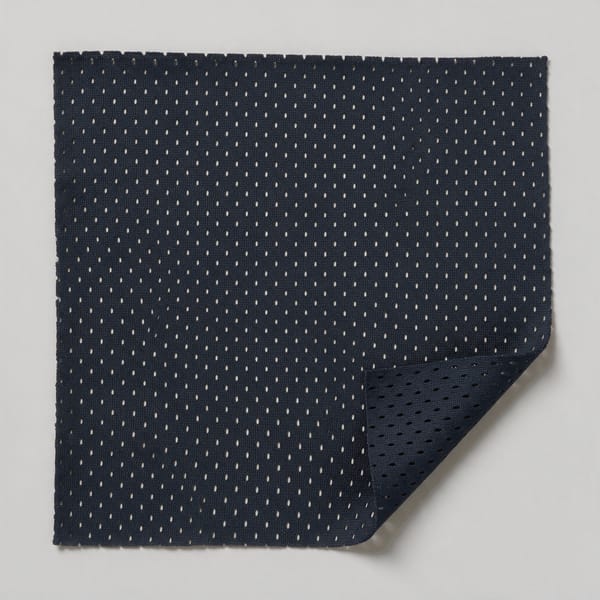
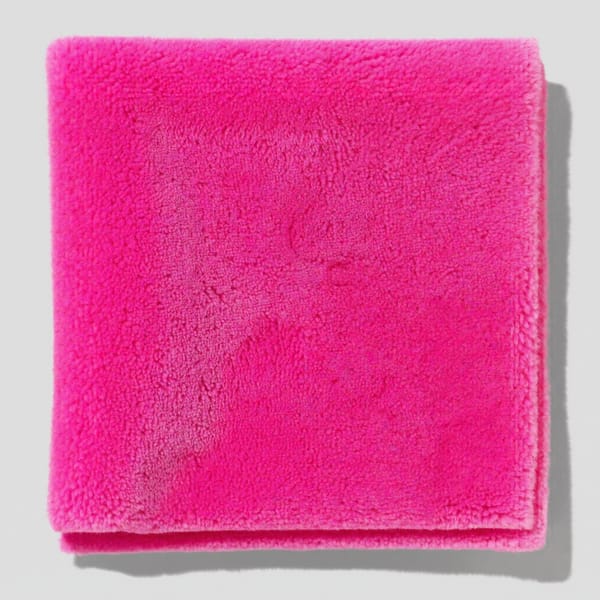
Weight, composition and color options are defined per request; contact us for samples. The weight ranges are Fersan’s production window; exact figures are confirmed by order and approved sample. Swatch images and videos are illustrative and AI-generated. Physical samples are sent on request.
WEIGHT — PRODUCTION WINDOW / ON REQUEST · COMPOSITION — POLYESTER-BASED · FINISHING — DYEING / PRINTING / FUNCTIONAL
A double-knit giving high dimensional stability, even twin faces and better recovery than plain rib.
Stretches notably less than rib; it is a smooth-faced double-knit (not ribbed) and is less suited to tight binding than rib. Same structure as the Interlock family.
Structured dresses/skirts/blazers · bodysuits and shapewear panels · sport-fusion tops
A smooth, four-way-stretch body that takes shape from the pattern and holds it — the base for precise, seam-driven design.
The high elastane share is heat-sensitive — keep iron and press temperatures low. Drape is limited at heavy weights and it is not for light summer pieces. Often confused with ponte: ponte is more stable and two-way, scuba springier and four-way.
Structured jackets and dresses · outer face of bags and accessories · decorative panels
It adds volume to the surface without adding weight — a richer texture at the same grammage.
The embossing can flatten under high heat and pressure, so ironing and pressing must stay low. The thickness difference at the blister peaks calls for care in cutting and sewing.
With equally soft faces it needs no extra lining and keeps a consistent look in reversible designs.
Standard fleece is usually double-brushed too; “double-faced” mainly denotes a deliberately balanced/finished nap on both sides. Both napped faces double the pilling-prone area (anti-pill recommended).
The base of high-volume sport/promo basics — light, fast-drying and economical to make.
Edges curl; without elastane pure PES has no permanent structural stretch; opacity is low at light weights. Same structure as the Single Jersey family (performance-tuned by yarn/finish).
Training/running tees · sport tanks · performance polos · jerseys · leggings-shorts (with elastane)
Pulls sweat off the skin and evaporates it fast to stay dry and cool in intense activity — a clear edge over cotton.
Wicking depends heavily on knit and finish; a finish-free “dry fit” claim may not match real performance. Pure PES can hold odour more than cotton. Pure PES stretches mechanically; the 10–20% elastane version is truly elastic.
Microfilament fineness gives unique softness and moisture spreading over a wide surface — a near-luxury touch.
Fine filament raises abrasion and heat/iron sensitivity; dense builds reduce breathability in some versions. “Microfiber” is only correct for <1 dpf filament.
Polos/tees · sport tops/joggers · fitted dresses · babywear
A double-knit that is more stable, opaque and durable than single jersey — both faces usable.
Thicker/heavier than jersey at equal weight; not ideal for very thin summer pieces; stretch (elastane-free) is more limited than jersey. Same structure as the Interlock family.
Decorative outerwear · curtains and home textiles · structured panels
A structured base that knits the pattern straight into the warp, offering high dimensional stability and a decorative relief surface.
The warp-knit structure has little stretch and is unsuitable for fitted, stretchy pieces; since the pattern is set up on the machine per customer request, it requires a minimum production run.
Distance to nearest reference — batch tolerance is measured separately (below).
Depth
Deep
Character
Cool
LCH
L 37 · C 16 · h 206°
Dye class
Disperse · polyester · HT ~130 °C
Batch consistency
Lot 01ΔE 0.6
Lot 02ΔE 0.5
Lot 03ΔE 0.4
✓ Within tolerance · avg ΔE 0.5 · target ≤ 1.0
For dyeing fabric the reference is the Pantone TCX (cotton) standard; our dyehouse target is a batch-to-batch ΔE < 1.0 — a commercial match (CMC 2:1). This panel illustrates that tolerance: each lot’s ΔE is the real CIEDE2000 difference from the dyed sample — the roll we ship stays inside that tolerance. Screen colour is approximate (metamerism + substrate); an exact match is confirmed against a physical lab dip.
Yarn to fabric, dyed and finished to spec.
Frequently asked questions.
Production & product
What types of knit fabric do you produce?
Fersan produces ten families of polyester knitted fabric — 42 catalogued constructions from 60 to 500 g/m². The core structures are single jersey (one needle bed, smooth face, light and fast-drying), interlock (two needle beds, identical on both faces, denser and dimensionally stabler), rib (1×1 or 2×2 wales with mechanical stretch), piqué, fleece, raschel mesh, two- and three-thread fleece, and sport/technical knits. Single jersey and interlock differ mainly in bed count: interlock is knitted on two beds, so at the same yarn it is heavier, more opaque and more stable, while single jersey is lighter and more economical. All ten families are knitted from polyester yarn we texture ourselves in Çorlu, then dyed and finished in the same building. Minimum order is 500–1000 kg depending on construction, and colour is held from lab dip to bulk at ΔE ≤ 1.0 (CIEDE2000).
What weight range do you work in?
60–500 g/m². Lining mesh and breathable net sit at the lightest end, interlock rib and Raschel jacquard at the heaviest. Each fabric’s own typical window is stated on its technical data sheet.
What yarns do you use?
Our production is built on a polyester base yarn. In addition to pure polyester, we offer blends combining polyester with fibers such as cotton, viscose, or elastane, depending on the intended use and the handle you want. Yarn selection is guided by the durability, stretch, and comfort your fabric needs to deliver.
Should I choose single jersey or interlock?
Single jersey is single-bed: light, fluid, edges curl. Interlock is double-bed: identical faces, no curl, more structured. Choose jersey when lightness and breathability lead; interlock when stand, opacity and durability lead.
For a polo, piqué or bird’s-eye mesh?
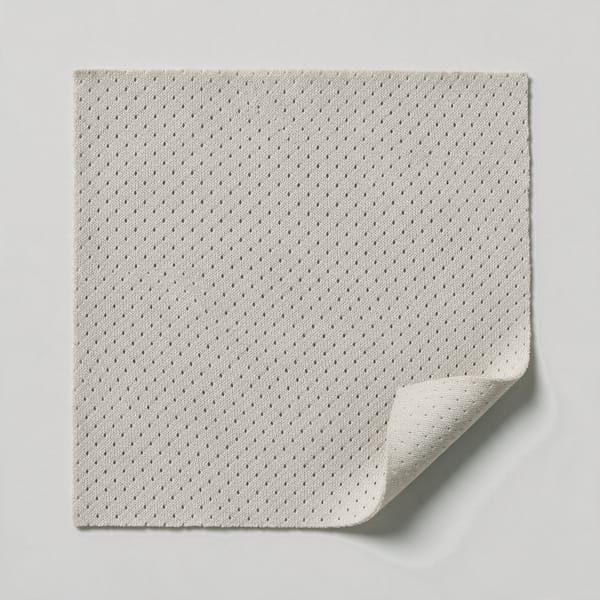
Piqué gives a coarser, deeper honeycomb relief and a structured stand — the classic polo look. Bird’s-eye mesh carries smaller, denser dots: cooler, with a flatter print ground. Corporate polos usually take piqué, performance polos bird’s-eye.
Where is rib fabric used?
Rib gives high crosswise stretch and recovery, which makes it the standard for collars, cuffs and hems. The elastane version increases recovery, while interlock rib can also serve as a more structured body fabric.
What is the difference between two-thread and three-thread fleece?
In two-thread (French terry) an extra loop yarn is fed onto the ground, leaving uncut terry loops on the back. Three-thread adds a binding yarn, making the structure thicker and more stable; brushed, it gives the classic sweat hand.
Which net and mesh structures do you produce?
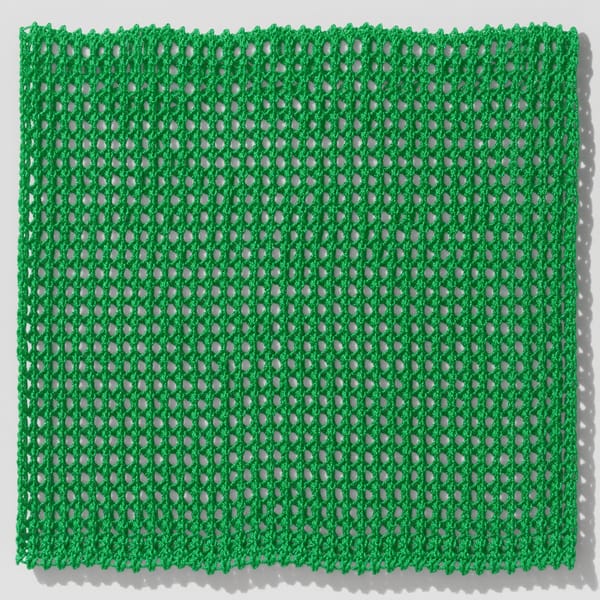
Open sports net, bird’s-eye mesh, fine lining mesh, jacquard mesh and three-layer spacer (air mesh). The choice follows pore size, opacity and the panel’s job; a jersey usually combines two of them panel by panel.
When is Raschel (warp knitting) the right choice?
Raschel is chosen when you need hole geometry and dimensional stability that weft knitting cannot give: tulle, eyelet net, power net and jacquard structures. In compression, swimwear and lingerie applications, power net is the standard.
Is there an rPET version of your fabrics?
Yes. The same structures are knitted from GRS-certified rPET yarn; jersey, interlock, French terry, fleece, dry-fit and bird’s-eye mesh are standard parts of our rPET programme. Shipments are documented with a Transaction Certificate.
Technical & quality
How do we set the elastane (spandex) ratio?
Typical constructions run 92–95% polyester / 5–8% elastane. A higher share increases recovery and body-hugging fit but also sensitivity to heat and chlorine. If you are targeting compression, a warp-knit power net construction gives 4-way stretch.
What is the fabric width, and does it come tubular or open-width?
Width depends on machine diameter and needle count; open-width typically runs broad while tubular runs narrower. Single-bed structures can ship tubular, while interlock and Raschel usually go open-width. The exact width is confirmed with the quotation.
How is shrinkage behaviour controlled?
Shrinkage comes from insufficient relaxation and from knitting tension. Heat-setting and relaxation parameters are tuned separately for each structure; dimensional stability is measured after washing and reported per order. The exact figure depends on structure and finish and is confirmed with the quotation.
Do you share fastness and pilling results?
Yes. Wash, rubbing and light fastness plus pilling are tested and reported per order. Deep and bright shades can sit at the lower end of the range for rubbing fastness; if you have a critical target we verify it together at the sampling stage.
Which finishes can you apply?
Moisture-wicking, antimicrobial, UV protection (UPF), water-repellent (PFAS-free DWR), anti-pilling and softening finishes are applied per order. Every performance claim is documented with a test report — we do not label an unfinished fabric as performance.
Are your fabrics suitable for sublimation printing?
Yes — a polyester base is the best ground for sublimation. Plain jersey, mini piqué and fine mesh carry full patterns, while on coarse open net the motif breaks across the texture, so those usually run in solid ground colours. We tune heat-setting to your printer’s process.
Can I get a technical data sheet for each fabric?
Yes. All forty-two fabrics have their own published data sheet: weight window, composition, knit type, stretch class, typical use and typical technical ranges. The sheets can also be downloaded as PDFs.
Can we request a custom weight and color?
Yes. We can produce fabrics to the specific weight and color your project requires. For color, you can share your own reference (a Pantone code or a physical sample), and we will confirm the target weight range together based on the fabric’s end use.
Can you develop a fabric that is not in the catalogue?
Yes — the catalogue is a starting point, not a boundary. We engineer the target weight, hand, stretch and finish combination around your garment and begin with a proposal sample. Send us your reference fabric and we will work its equivalent within our own programme.
Can we get a sample before ordering?
Of course. Before moving to bulk production, we offer a sampling process so you can evaluate the fabric’s handle, color, and quality. Once you send your sampling request, we prepare examples matching the desired specifications and submit them for your approval.
1
The count
A galaxy of stitches a day.
A knit is a number: hundreds of loops in every square centimetre. We converted our 1,350-ton month of dyed fabric into stitches — scroll, and let the counter grow.
01One1
A single stitch
Everything starts with one loop: the yarn passes through itself, and fabric is born.
02Square centimetre≈170
On a fingernail
In 28-gauge single jersey, one square centimetre carries about 170 stitches.
03Square metre1.7M
1.7 million stitches
One square metre holds 1.7 million loops — order beyond counting.
04T-shirt2M+
Millions on your back
An average tee is ~1.3 m² of fabric: you wear more than two million stitches.
05Second4.4M/s
Faster than heartbeats
Production runs at ~4.4 million stitches a second: in 11 minutes, as many as a human heart beats in a lifetime.
06Day377bn
A galaxy a day
About 377 billion stitches a day — on the order of the stars in the Milky Way.
07Year138tn
Consistency at a trillion
About 138 trillion stitches a year — on the order of the synapses in a human brain. And every one is knitted at the same tension: that is quality.
Stitch tally: 1,350 tons of dyed fabric a month at an average 200 g/m² makes 6.75 million square metres; 28-gauge jersey carries about 170 stitches per square centimetre. At that rate production knits about 4.4 million stitches a second — a lifetime of heartbeats every 11 minutes; about 377 billion a day (on the order of the Milky Way’s stars) and about 138 trillion a year (on the order of the synapses in a human brain). Assumptions are printed in the footnote at the end of the section.
Share a brief for collection and custom development.
We set weight, composition and finishing to the job at hand. We send a sample first, then we run it.