
Microfleece
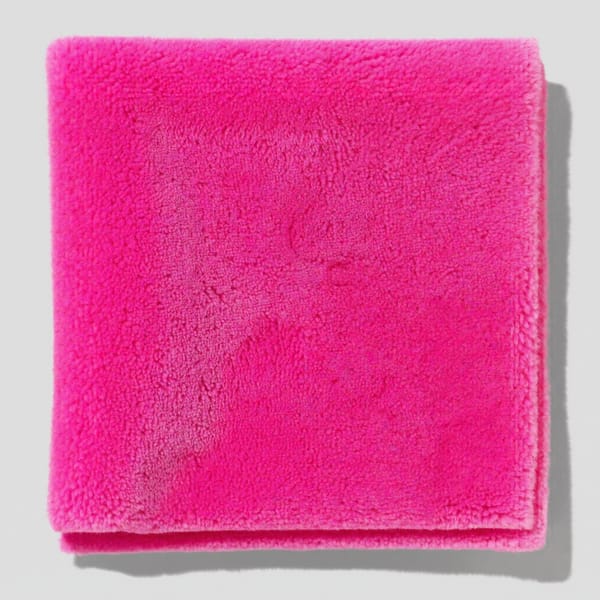
| Weight | 100–200 g/m² (2.9–5.9 oz/yd²) In family: 100–400 g/m² · 4 fabrics |
|---|---|
| Composition | 100% polyester; finer (micro) filament/yarn than standard fleece. |
| Knit type | Microfleece · Polar Fleece |
| Use class | Sport |
| Stretch | Mechanical stretch |
| Knit | A dense ground knit from fine microfilament yarn, brushed for a fine, short, dense nap (usually double-sided, low loft). |
| Hand | Very soft, fine, low-loft and flexible; close to the skin, light, breathable. |
| Typical use | Inner lining/mid-layer · light sport-outdoor tops · baby-kidswear |
| Strength | A very light, flexible yet moisture-managing fabric — the ideal thin mid-layer. |
| Watch for | Being fine/low-loft, its standalone insulation is below thick fleece; treat it as a mid/lining layer, not the main warmth layer. |
Width, gauge, finishing options and test standards are shared on request.
Typical technical ranges
| Weight tolerance | ±5% (typical); on raised/napped fleece ±5–7% is more realistic, up to ±7% on light micro-fleece |
|---|---|
| Width | Fersan standard: 160 cm open width (owner-declared, 2026-09-03). Structural reference: open width ~150–190 cm (typically 160–180); tubular ~70–95 cm. Varies with machine diameter/cut, weight and stenter draw |
| Shrinkage (wash) | Length/width ~±2–4% (typical after proper heat-set); may reach ~5% in length if setting/finishing is weak. A ≤±3% target is common |
| Color fastness | Wash 4–5; rubbing (dry) 4–5, (wet) 3–4; light 4–6 (typical disperse-dyed PES). Minimum ~4 targeted; wet rub drops to the low end on deep/bright shades |
| Abrasion / pilling | Pilling 2–3 (raw/unfinished) → 3–4 with anti-pill shearing/finish, up to 4 in good cases. Martindale abrasion is usually not reported for fleece; if reported, ~15,000–30,000 cycles order of magnitude (construction/yarn dependent) |
| Gauge / yarn | Machine gauge ~E18–E24 (typically E20–E22; heavy/lofty polar down to E16–E18); yarn typically 100–300 denier textured (DTY) PES (coarser denier or plied feed for nap/loft; ~75 denier microfilament on micro-fleece) |
These ranges are industry-TYPICAL / indicative values based on construction and fiber, not Fersan’s binding QC measurements. Exact values are confirmed per order, approved sample and lot-based QC report.
Trade & dispatch
| HS heading | 6006.32 — Other knitted fabric, of synthetic fibres, dyedUnbleached or bleached shipments: 6006.31 |
|---|---|
| Origin | Turkey — Çorlu, Tekirdağ |
| Packaging | Rolls wound on a cardboard core in a PE bag; roll size planned around container fill |
| Shipping documents | Commercial invoice · packing list · A.TR movement certificate · transport document |
| Delivery terms | EXW · FOB · DAP — shipping plan confirmed with your quotation |
The HS heading is indicative; final classification is made by the customs broker based on the sample’s composition, width and finish.
Related reading: Fleece and Scuba: Structured Polyester Knits · Brushed, Unbrushed and Fleece: Where Warmth Comes From in Polyester Knits · The Weight Map: Which Knit Goes Where, from 60 to 500 g/m² · Thermophysiological Comfort: Ret, Rct and the Sweating Hot Plate
Related calculators: Sample weight calculator: from a weighed swatch to g/m² (ISO 3801) · Waste & Efficiency Calculator — Required Input Quantity · Meter ↔ Kilogram (Roll) Converter
Programmes we use this fabric in: Polyester Fleece Fabric Manufacturer — Turkey · Microfiber / Micro Polyester Fabric Manufacturer — Turkey · Training Wear Fabric Manufacturer — Turkey
Other fabrics in the same family: Polar Fleece 180–400 · Anti-Pill Fleece 200–340 · Double-Faced (Double-Brushed) Fleece 200–320
Frequently asked questions
What weight range is Microfleece produced in?
100–200 g/m² (2.9–5.9 oz/yd²). In family: 100–400 g/m². Weight, composition and color options are defined per request; contact us for samples. The weight ranges are Fersan’s production window; exact figures are confirmed by order and approved sample.
What is Microfleece made of and how is it knitted?
100% polyester; finer (micro) filament/yarn than standard fleece. A dense ground knit from fine microfilament yarn, brushed for a fine, short, dense nap (usually double-sided, low loft).
What is Microfleece used for?
Inner lining/mid-layer · light sport-outdoor tops · baby-kidswear. A very light, flexible yet moisture-managing fabric — the ideal thin mid-layer. Being fine/low-loft, its standalone insulation is below thick fleece; treat it as a mid/lining layer, not the main warmth layer.
What are the minimum order, lead time and delivery terms?
Minimum order (MOQ): 500–1,000 kg per colour — varies by fabric · Lead time: Typically 3–4 weeks from order confirmation to dispatch · Sampling: Sampling terms are set per project and metreage; it begins after a short technical consultation · Response time: Quotation requests answered within 2 business days · Delivery terms: EXW · FOB · DAP — shipping plan confirmed with your quotation.