Alongside strictly necessary cookies, we use functional and analytics cookies only with your consent. You can choose your preferences and change them any time. Cookie Policy
Cookie preferences
Manage each category separately. Strictly necessary cookies are required for the site to work and cannot be turned off.
NecessaryAlways on
Required for the site’s core functions, security and remembering your cookie preference — including form security (hCaptcha). No consent required.
Functional
Displays embedded content such as Google Maps. When off, the map does not load until you click “Show map”.
Analytics
Helps us improve the site by measuring visit statistics. Currently inactive; when enabled it runs only with your consent.
Application
Medical Uniform Fabrics
Healthcare garments are washed dozens of times a week. Durability, dimensional stability and colour fastness drive the fabric choice.
Medical Uniform
Weight window80–360 g/m²
CertificatesOEKO-TEX® · ISO
IncotermsEXW · FOB · DAP
Polyester knit carries three things at once in medical uniforms: dimensional stability through hot industrial washing, the deep wash fastness of disperse dyes, and fast drying. Elastane variants add freedom of movement across long shifts.
Hygiene claims belong to the finish layer, not the fabric: antimicrobial treatment is optional and its durability is reported through wash-cycle testing. The five structures below run from scrub tops to structured gowns.
Recommended fabrics
01
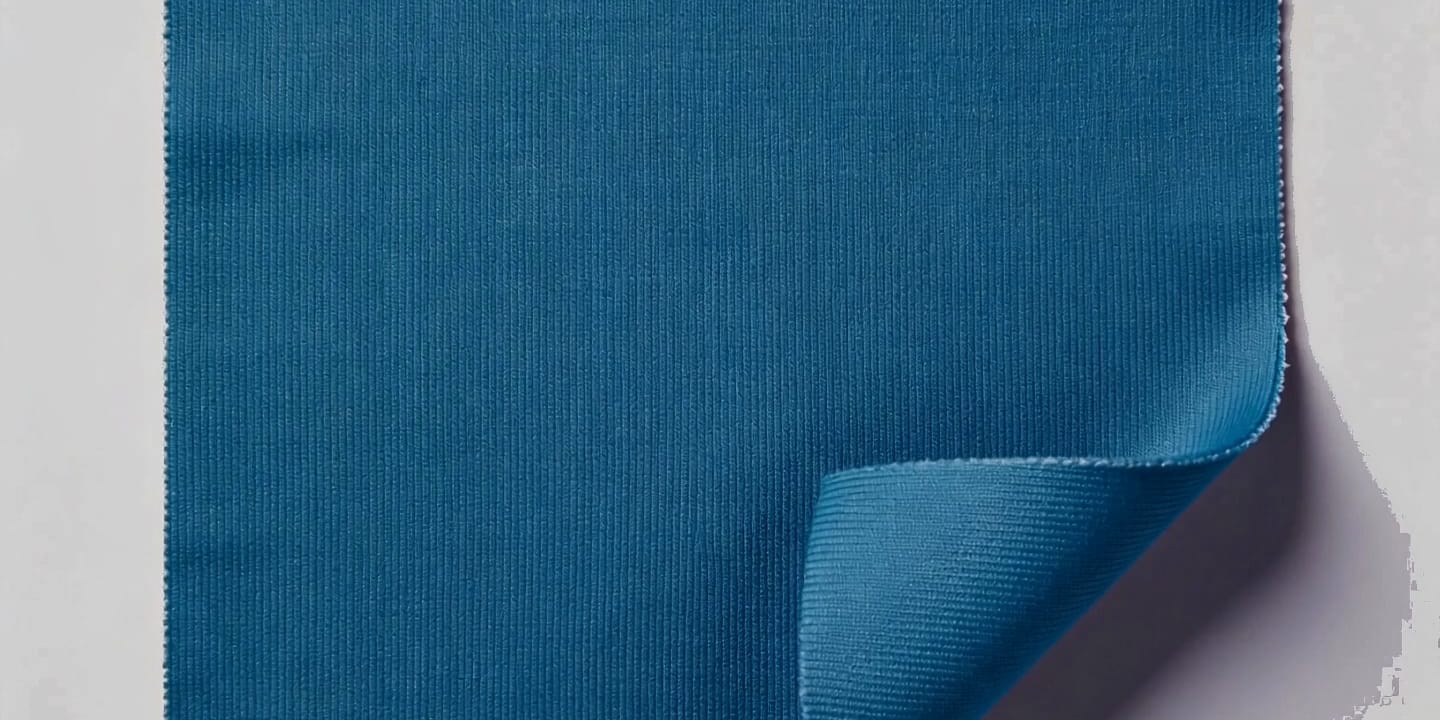
Polyester Interlock
Interlock (double-knit)
80–260 g/m²
In this application
The scrub and uniform body: smooth double face, colour coding via sublimation, non-curling edge.
The link pre-fills the quote form with the fabrics on this page.
Frequently asked questions
Why polyester knit for medical uniforms?
Frequent hot industrial washing shrinks and fades cotton; heat-set polyester knit holds its dimensions, disperse dye locks colour inside the fibre, and the fabric dries fast — matching shift turnaround.
Is antimicrobial fabric permanent?
The antimicrobial effect is added as a finish and can decline with washing; the claim is therefore stated with a test report after a defined number of wash cycles. The durability target is agreed at order stage.
Which weight window for a scrub top?
The 170–260 g/m² slice of the interlock family is the common starting point for scrub bodies: it balances opacity, drape and sewability. Structured gowns and jackets step up to 270–360 g/m² double-knit interlock.
What do you recommend against blood and drug stains?
Because polyester fibre does not absorb liquid, the stain sits on the surface and in most cases comes out in industrial laundering; a soil-release finish can be applied to improve that further. We state plainly that no fabric is stain-proof: the finish is applied and its effect is evidenced with a test report at an agreed wash count.
Can your fabrics be autoclaved?
No — and it matters to say so plainly. This programme is for the daily uniform of healthcare staff and is built to be laundered industrially, typically at 60–75 °C. Autoclaving (121–134 °C saturated steam) belongs to single-use surgical products or purpose-built technical textiles, and falls outside our production scope.