
Microfiber Polyester Knit
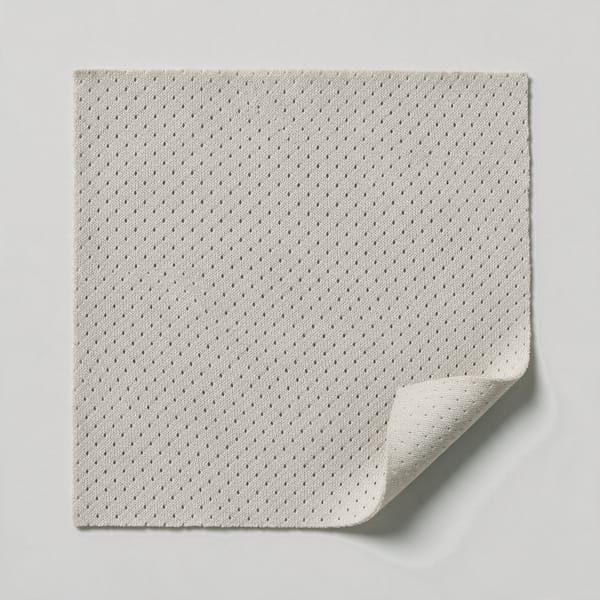
| Weight | 85–180 g/m² (2.5–5.3 oz/yd²) In family: 85–250 g/m² · 4 fabrics |
|---|---|
| Composition | 100% polyester microfiber — filament fineness below 1 denier (microdenier, ~0.5 dpf); far finer than standard PES (1.5–4 dpf). |
| Knit type | Microfiber polyester knit · Sport & Technical |
| Use class | Sport |
| Stretch | Mechanical stretch |
| Knit | A dense knit from very fine filament yarn (flat/jersey or warp/tricot based); often given a sueded/brushed “peach skin” hand. |
| Hand | Silky-soft, very smooth; with peach-skin finish a velvety matte touch; light and draping. |
| Typical use | Soft-hand tees/tops · athleisure · light shirting (peach skin) · lining |
| Strength | Microfilament fineness gives unique softness and moisture spreading over a wide surface — a near-luxury touch. |
| Watch for | Fine filament raises abrasion and heat/iron sensitivity; dense builds reduce breathability in some versions. “Microfiber” is only correct for <1 dpf filament. |
Width, gauge, finishing options and test standards are shared on request.
Typical technical ranges
| Weight tolerance | Typically ±5%; in very light (85–120 g/m²) jersey/mesh constructions may run to ±6–7% in practice. Spandex relaxation/tension affects GSM |
|---|---|
| Width | Fersan standard: 160 cm open width (owner-declared, 2026-09-03). Structural reference: open width (finished): typically 150–190 cm; tubular: typically 90–180 cm depending on supply form (varies with cylinder diameter/machine and final set width) |
| Shrinkage (wash) | After wash, length/width: typically −3% to −6%; ≤ ±3% achievable with good heat-set/compaction. Single jersey moves more than balanced interlock/rib; spandex recovery can increase length change |
| Color fastness | Wash 4–5; rubbing dry 4–5, wet 3–4 (deep/bright & migration-prone shades may drop to 2–3); light 4–5; perspiration typically 4–5. Wet rub & deep/bright shades are the weakest link; reductive clear (RC) quality is decisive |
| Abrasion / pilling | Martindale abrasion: typically ~15,000–40,000+ cycles (tight piqué/double-knit high, light mesh/jersey lower); pilling: typically 3–4 (near 4 on smooth filament; texturized/microfiber/brushed surfaces can sit at 2–3; anti-pill finish can lift to 4) |
| Gauge / yarn | Machine gauge: typically E24–E32 (E36–E40 for very fine constructions); yarn: typically 50–150 denier texturized/microfilament PES. Notation is denier/filament-count (e.g. 50/72, 75/72, 100/144, 150/288) — higher filament count = lower dpf = microfilament/soft hand. Spandex variants add base PES + spandex (e.g. 20–40 denier) |
These ranges are industry-TYPICAL / indicative values based on construction and fiber, not Fersan’s binding QC measurements. Exact values are confirmed per order, approved sample and lot-based QC report.
Trade & dispatch
| HS heading | 6006.32 — Other knitted fabric, of synthetic fibres, dyedUnbleached or bleached shipments: 6006.31 |
|---|---|
| Origin | Turkey — Çorlu, Tekirdağ |
| Packaging | Rolls wound on a cardboard core in a PE bag; roll size planned around container fill |
| Shipping documents | Commercial invoice · packing list · A.TR movement certificate · transport document |
| Delivery terms | EXW · FOB · DAP — shipping plan confirmed with your quotation |
The HS heading is indicative; final classification is made by the customs broker based on the sample’s composition, width and finish.
Related reading: Mesh and Piqué: Breathable Polyester Knits · Moisture-Wicking Finishing in Polyester Knits · Functional Finishes for Polyester Knits · Knit Quality Testing: What to Measure in Polyester
Related calculators: Knit weight calculator: loop length to estimated GSM · GSM ↔ oz/yd² Converter · Teamwear Fabric Selector — construction and weight by kit part
Programmes we use this fabric in: Polyester Jersey (Single Jersey) Fabric Manufacturer — Turkey · Sports Fabric and Performance Knit Manufacturer — Turkey · Dry-Fit and Moisture-Wicking Fabric Manufacturer — Turkey · Microfiber / Micro Polyester Fabric Manufacturer — Turkey · Activewear Fabric Manufacturer — Turkey · Cycling Jersey Fabric Manufacturer — Turkey
Other fabrics in the same family: Single Jersey (Polyester) 120–200 · Moisture-Wicking Performance Knit 130–220 · Interlock (Double-Knit Polyester) 160–250
Frequently asked questions
What weight range is Microfiber Polyester Knit produced in?
85–180 g/m² (2.5–5.3 oz/yd²). In family: 85–250 g/m². Weight, composition and color options are defined per request; contact us for samples. The weight ranges are Fersan’s production window; exact figures are confirmed by order and approved sample.
What is Microfiber Polyester Knit made of and how is it knitted?
100% polyester microfiber — filament fineness below 1 denier (microdenier, ~0.5 dpf); far finer than standard PES (1.5–4 dpf). A dense knit from very fine filament yarn (flat/jersey or warp/tricot based); often given a sueded/brushed “peach skin” hand.
What is Microfiber Polyester Knit used for?
Soft-hand tees/tops · athleisure · light shirting (peach skin) · lining. Microfilament fineness gives unique softness and moisture spreading over a wide surface — a near-luxury touch. Fine filament raises abrasion and heat/iron sensitivity; dense builds reduce breathability in some versions. “Microfiber” is only correct for <1 dpf filament.
What are the minimum order, lead time and delivery terms?
Minimum order (MOQ): 500–1,000 kg per colour — varies by fabric · Lead time: Typically 3–4 weeks from order confirmation to dispatch · Sampling: Sampling terms are set per project and metreage; it begins after a short technical consultation · Response time: Quotation requests answered within 2 business days · Delivery terms: EXW · FOB · DAP — shipping plan confirmed with your quotation.