Alongside strictly necessary cookies, we use functional and analytics cookies only with your consent. You can choose your preferences and change them any time. Cookie Policy
Cookie preferences
Manage each category separately. Strictly necessary cookies are required for the site to work and cannot be turned off.
NecessaryAlways on
Required for the site’s core functions, security and remembering your cookie preference — including form security (hCaptcha). No consent required.
Functional
Displays embedded content such as Google Maps. When off, the map does not load until you click “Show map”.
Analytics
Helps us improve the site by measuring visit statistics. Currently inactive; when enabled it runs only with your consent.
Manufacturing Programme
Gym Wear Fabric Manufacturer — Turkey
Fersan Tekstil is a vertically integrated polyester knitted fabric manufacturer in Çorlu, Turkey; the gym wear programme selects fabric on abrasion life rather than on appearance.
Gym Wear Fabric
Weight window120–360 g/m²
CertificatesOEKO-TEX® · ISO
IncotermsEXW · FOB · DAP
From a textile point of view, the gym is an abrasive environment. Bench surfaces, bar knurling, collared plates, carpet and mats — training garments meet all of them by rubbing, and that contact repeats every session. Add three to five washes a week. As a result, what retires a gym garment is rarely a tear; it is a surface that has pilled and started to look worn.
That is why the programme is built from the heavy, dense end of the catalogue: double-face interlock supplies the dense structure that stays opaque even under stretch, heavy jersey gives the body weight and substance, elastane jersey and interlock jersey preserve freedom of movement in the training top, and elastane interlock carries recovery in bottoms. We set construction density and filament fineness against your abrasion test target and report pilling behaviour.
Structures we manufacture for gym and fitness wear
01
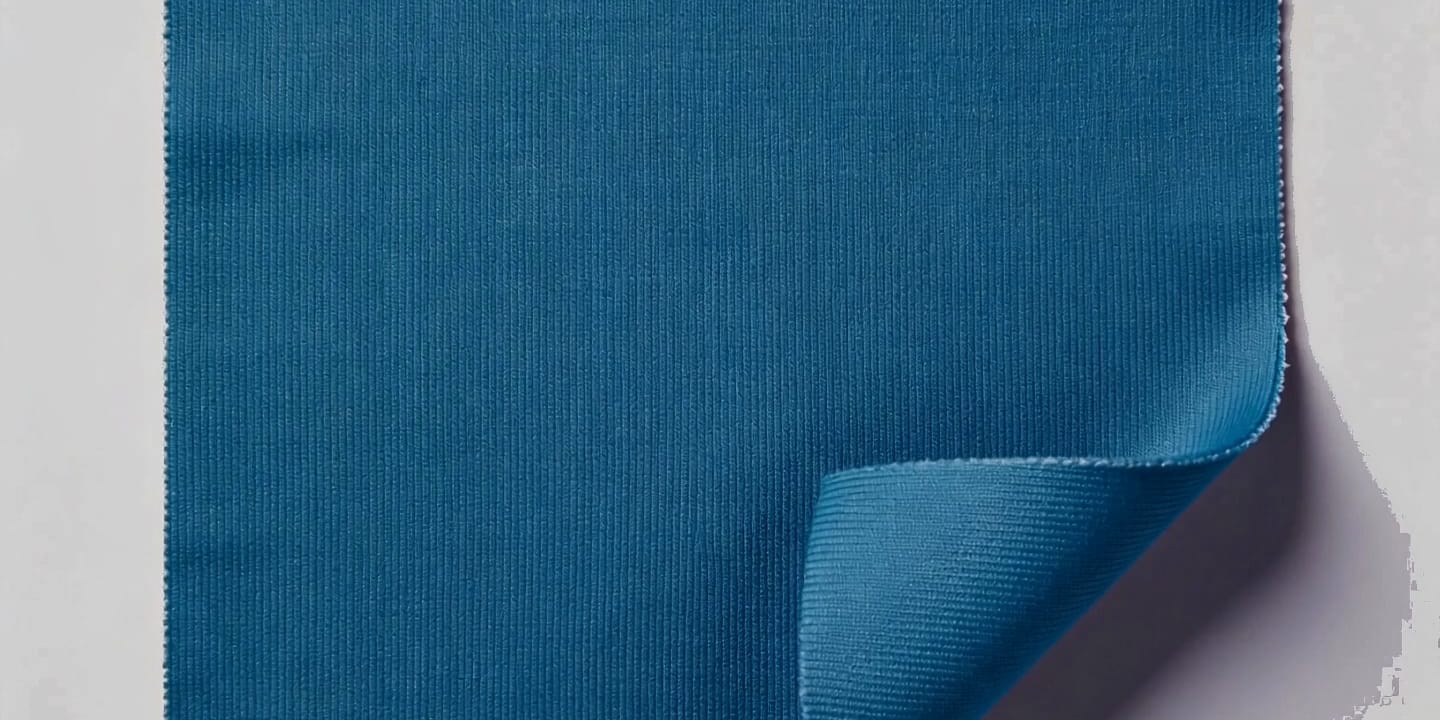
Ponte di Roma (Punto di Roma) Double Knit
Ponte di Roma double knit
270–360 g/m²
In this application
The densest structure in the catalogue: stays opaque even under stretch and resists surface breakdown against equipment.
Composition
Polyester-led; most qualities carry ~3–8% elastane. Market ponte is often rayon/poly-elastane; this file takes a polyester+elastane base.
Weight windows come from catalogue data; final specs are confirmed on a sample.
Ordering & Sampling
Minimum order (MOQ)
500–1,000 kg per colour — varies by fabric
Lead time
Typically 3–4 weeks from order confirmation to dispatch
Sampling
Sampling terms are set per project and metreage; it begins after a short technical consultation
Response time
Quotation requests answered within 2 business days
Delivery terms
EXW · FOB · DAP — shipping plan confirmed with your quotation
Capacity
~1,350 t/month knitting + dyeing at the Çorlu mill (since 1982)
Roll
Typically 25–35 kg per roll — varies with weight and order
Figures are typical ranges; exact terms are confirmed with your quotation.
Care Label Generator — ISO 3758 wash instructions & symbol text
Generate ISO 3758 standard care instruction text from care selections. Free, no sign-up; the formula used is shown openly on the page.
Formula
Output orders the 5 care axes in the fixed ISO 3758 reading sequence: Washing → Bleaching → Drying → Ironing → Professional care. Each selection maps to the standard’s generic definition (e.g. tub + temperature, triangle = bleach, square = drying, iron = plate temperature, circle = professional care). Safe polyester default: 40 °C gentle · no bleach · tumble dry low · warm iron (110 °C). IMPORTANT: GINETEX/ISO symbol graphics are licensed for commercial use — this tool returns only the TEXT definition and embeds no unlicensed symbol artwork.
Worked example
Input: 40 °C, no bleach, tumble dry low, low iron (110 °C), no dry clean. Output text: “Wash at 40 °C · Do not bleach · Tumble dry low · Iron low (max 110 °C) · Do not dry clean”.
Input → output examples
Wash
Bleach
Tumble dry
Iron
Dry clean
Care instruction
30 °C
Do not bleach
Do not tumble dry
Low (110 °C)
Do not dry clean
Wash at 30 °C · Do not bleach · Do not tumble dry · Iron low (max 110 °C) · Do not dry clean
40 °C
Do not bleach
Low heat
Low (110 °C)
Do not dry clean
Wash at 40 °C · Do not bleach · Tumble dry low · Iron low (max 110 °C) · Do not dry clean
60 °C
Oxygen (non-chlorine)
Normal heat
Medium (150 °C)
P (perchloroethylene)
Wash at 60 °C · Oxygen bleach only · Tumble dry normal · Iron medium (max 150 °C) · Professional dry clean (P)
ISO 3758 text; GINETEX symbol artwork not printed unlicensed.
Frequently asked questions
How do you wash polyester?
Wash polyester at 30–40 °C on a gentle/delicate cycle; heat above 110 °C can deform the fibre. Tumble dry on low, and if ironing is needed use the lowest (110 °C) setting with a press cloth. Never use chlorine bleach.
What do care symbols mean?
There are five base symbols: tub=washing, triangle=bleaching, square=drying, iron icon=ironing, circle=professional care. A bar under a symbol marks gentleness, a dot or number inside marks temperature, and a cross over it means “do not”. This tool returns each symbol’s ISO 3758 text definition.
Does this tool output GINETEX symbol graphics?
No. GINETEX/ISO 3758 symbol artwork is trademark-protected and requires a licence for commercial labels. This tool produces only the standard’s official text definition and a human-readable care instruction; source the licensed symbol set from your supplier or GINETEX for the printed label.
Does the order of symbols on the label matter?
Yes. ISO 3758 defines a fixed reading order: washing → bleaching → drying → ironing → professional care. This tool always emits output in that order so the label stays internationally readable.
Your fabric development partner
We define product life up front: construction density, yarn selection and finish are built together around the wash count and abrasion level you are targeting. Pilling, abrasion resistance and post-wash dimensional change are documented with tests per order; an antimicrobial finish is applied on request and evidenced with a test report.
The link pre-fills the quote form with the fabrics on this page.
Frequently asked questions
How do you reduce pilling on gym garments?
Pilling is the joint result of yarn fuzzing and surface abrasion. A tight construction, the right filament choice and correctly set heat-setting delay that behaviour appreciably. We define your target abrasion level at the outset, then measure and report pilling with a standard test.
How do gym fabrics differ from running fabrics?
The two programmes are built from opposite ends of the catalogue. In running the criterion is weight: every gram is carried for the whole distance, so we work at the thin edge. In the gym the criterion is abrasion life: the garment meets equipment by rubbing and is washed several times a week, so we work at the dense end. They may be two products of the same brand, but the fabric decisions run in opposite directions.
Will it survive frequent washing?
Polyester fibre is naturally wash-resistant; what decides the outcome is colour fastness and dimensional stability. We set compacting and heat-setting against your target wash count, and report wash fastness together with dimensional change per order.
Do you offer odour control?
An antimicrobial finish is applied on request and evidenced with an independent test report. We will not claim durable odour control on this page without that report; the performance level is defined together against your target wash count.
How do order quantity and lead time work?
The 500–1,000 kg per colour band varies by fabric; in gym collections, turning core shades such as black and grey into a year-round running programme uses that band efficiently. Typical lead time is 3–4 weeks from order confirmation to dispatch, and we work EXW, FOB or DAP.