
Polyester French Terry
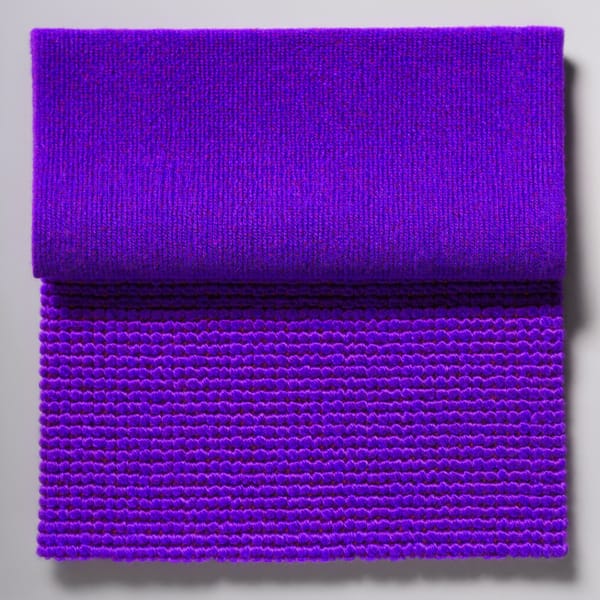
| Weight | 150–320 g/m² (4.4–9.4 oz/yd²) In family: 150–350 g/m² · 4 fabrics |
|---|---|
| Composition | 100% polyester (fine ground + ~2× thicker loop yarn); cotton-PES is common in the market, pure/high-PES applies for a polyester specialist. |
| Knit type | French terry (two-thread loop-back) · French Terry |
| Use class | Everyday |
| Stretch | Mechanical stretch |
| Knit | A loop-back knit on a single-bed machine: the ground yarn makes the flat face, the thick loop yarn the uncut loops on the reverse. |
| Hand | Flat, print-friendly face; soft, looped, lofty reverse; mid-full, lightly structured. |
| Typical use | Sweatshirts · hoodies · joggers · mid-season tops |
| Strength | Loop-back balances breathability with light warmth; polyester adds durability and fast drying. |
| Watch for | Pure-PES French terry is less common than cotton and can feel cooler/more synthetic; lacks cotton’s next-to-skin softness. |
Width, gauge, finishing options and test standards are shared on request.
Typical technical ranges
| Weight tolerance | ±5% (±6–7% on heavy/brushed variants) |
|---|---|
| Width | Fersan standard: 160 cm open width (owner-declared, 2026-09-03). Structural reference: open width typ. 150–200 cm; tubular typ. 70–100 cm (half-circumference). Varies with cylinder diameter (30–34″)/gauge and finished-width setting |
| Shrinkage (wash) | After-wash dimensional change typ. width −3 to −7%, length −3 to −7% (heat-set + compacting pulls toward the lower end; predominantly shrinkage direction). No hygroscopic shrink in 100% PES; looped-back relaxation can run slightly above plain jersey |
| Color fastness | Wash 4–5; rubbing dry 4–5, wet 3–4; light 4–6 (deep/bright and turquoise/navy shades may drop wet-rub to 2–3 and light to the lower end). Typical for disperse-dyed PES |
| Abrasion / pilling | Martindale abrasion typ. 20,000–40,000+ cycles; pilling ISO 12945 grade 3–4 (looped-back floats make it slightly more pill-prone than flat jersey; brushed variant can drop to 2–3) |
| Gauge / yarn | Machine gauge typ. E18–E24 (medium); feed yarn typ. 75–150 denier PES filament (150–300 denier on heavy variants). Finer/sporty toward E24, heavy sweat-fabric toward E18 |
These ranges are industry-TYPICAL / indicative values based on construction and fiber, not Fersan’s binding QC measurements. Exact values are confirmed per order, approved sample and lot-based QC report.
Trade & dispatch
| HS heading | 6006.32 — Other knitted fabric, of synthetic fibres, dyedUnbleached or bleached shipments: 6006.31 |
|---|---|
| Origin | Turkey — Çorlu, Tekirdağ |
| Packaging | Rolls wound on a cardboard core in a PE bag; roll size planned around container fill |
| Shipping documents | Commercial invoice · packing list · A.TR movement certificate · transport document |
| Delivery terms | EXW · FOB · DAP — shipping plan confirmed with your quotation |
The HS heading is indicative; final classification is made by the customs broker based on the sample’s composition, width and finish.
Related reading: Brushed, Unbrushed and Fleece: Where Warmth Comes From in Polyester Knits
Related calculators: Fabric weight calculator: construction to estimated GSM · Yarn consumption per fabric calculator · Waste & Efficiency Calculator — Required Input Quantity
Programmes we use this fabric in: Recycled Polyester Fabric Manufacturer (rPET) — Turkey · French Terry Fabric Manufacturer — Turkey · School Uniform Fabric Manufacturer — Turkey · Uniform, Workwear and Corporate Wear Fabrics
Other fabrics in the same family: Brushed (Fleece-Backed) Polyester French Terry 220–350 · Polyester French Terry with Elastane 190–320 · Melange (Heather) Polyester French Terry 160–320
Frequently asked questions
What weight range is Polyester French Terry produced in?
150–320 g/m² (4.4–9.4 oz/yd²). In family: 150–350 g/m². Weight, composition and color options are defined per request; contact us for samples. The weight ranges are Fersan’s production window; exact figures are confirmed by order and approved sample.
What is Polyester French Terry made of and how is it knitted?
100% polyester (fine ground + ~2× thicker loop yarn); cotton-PES is common in the market, pure/high-PES applies for a polyester specialist. A loop-back knit on a single-bed machine: the ground yarn makes the flat face, the thick loop yarn the uncut loops on the reverse.
What is Polyester French Terry used for?
Sweatshirts · hoodies · joggers · mid-season tops. Loop-back balances breathability with light warmth; polyester adds durability and fast drying. Pure-PES French terry is less common than cotton and can feel cooler/more synthetic; lacks cotton’s next-to-skin softness.
What are the minimum order, lead time and delivery terms?
Minimum order (MOQ): 500–1,000 kg per colour — varies by fabric · Lead time: Typically 3–4 weeks from order confirmation to dispatch · Sampling: Sampling terms are set per project and metreage; it begins after a short technical consultation · Response time: Quotation requests answered within 2 business days · Delivery terms: EXW · FOB · DAP — shipping plan confirmed with your quotation.