Alongside strictly necessary cookies, we use functional and analytics cookies only with your consent. You can choose your preferences and change them any time. Cookie Policy
Cookie preferences
Manage each category separately. Strictly necessary cookies are required for the site to work and cannot be turned off.
NecessaryAlways on
Required for the site’s core functions, security and remembering your cookie preference — including form security (hCaptcha). No consent required.
Functional
Displays embedded content such as Google Maps. When off, the map does not load until you click “Show map”.
Analytics
Helps us improve the site by measuring visit statistics. Currently inactive; when enabled it runs only with your consent.
Manufacturing Programme
School Uniform Fabric Manufacturer — Turkey
Fersan Tekstil is a vertically integrated polyester knitted fabric manufacturer in Çorlu, Turkey; the school uniform programme selects fabric not for a single garment but at the scale of an academic year and a cohort.
School Uniform Fabric
Weight window80–350 g/m²
CertificatesOEKO-TEX® · ISO
IncotermsEXW · FOB · DAP
A school uniform is bought on price, but judged nine months later. It is washed three to five times a week, often hot, and keeps that up for a full academic year. The problem that emerges is not that one garment wears out: it is that two uniforms standing side by side in the same class no longer look alike. A faded polo is immediately visible next to a new one.
So the programme targets two things at once: a surface that survives the wash cycle and a colour that holds across the cohort. Piqué and interlock give the structured stance in the body, single jersey the economical base, french terry the sweatshirt and cardigan layer, and rib the collar and cuffs. We set colour fastness to the level the school colour demands, and measure next year’s repeat order against the first year’s reference.
Structures we manufacture for school uniforms
01
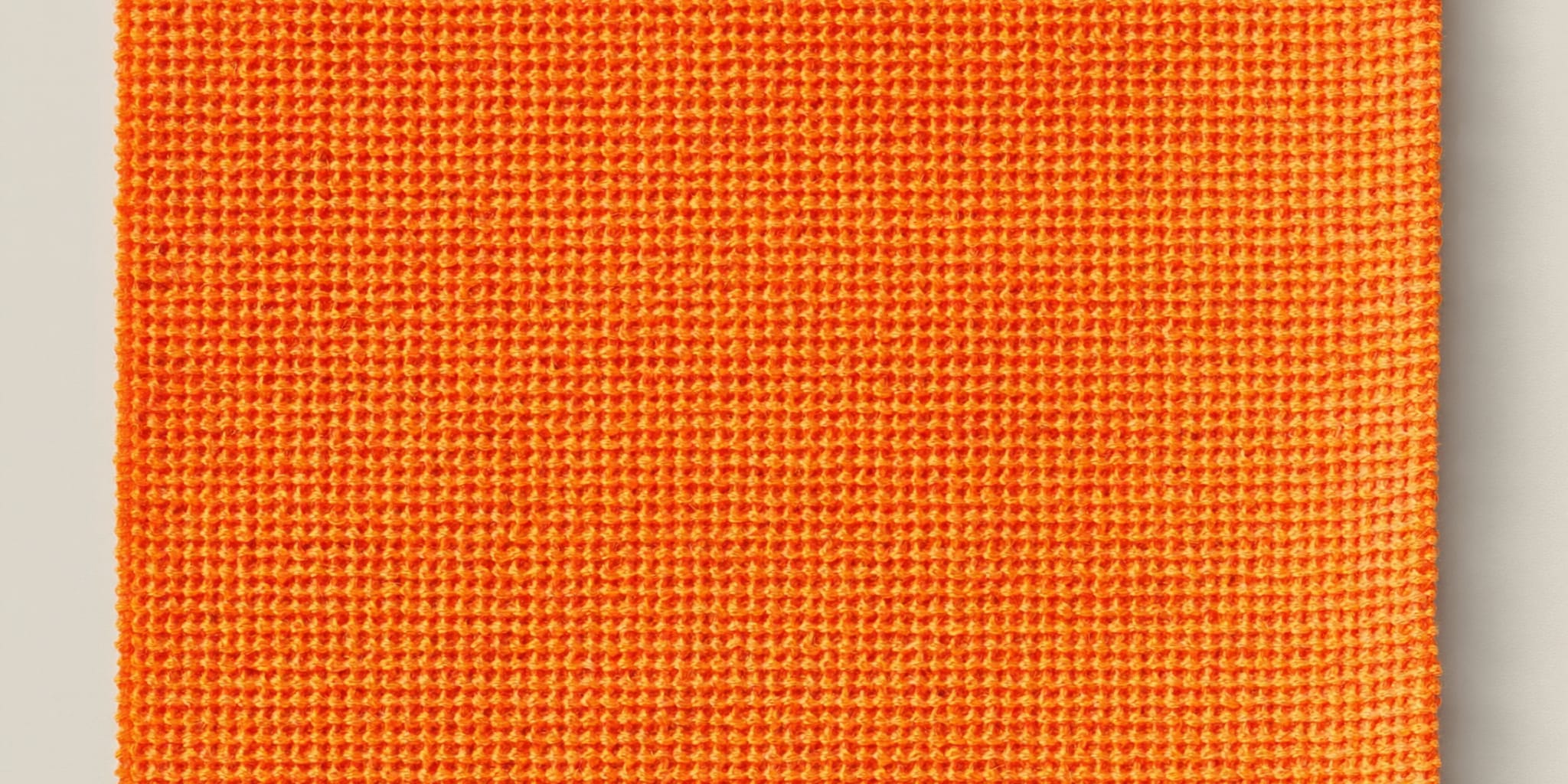
Polyester Piqué
Piqué
150–280 g/m²
In this application
The body of the uniform polo: a structured surface that shows soiling late and keeps its stance through frequent washing.
Composition
100% polyester (typical); microfilament yarn for sublimation lustre.
Weight windows come from catalogue data; final specs are confirmed on a sample.
Ordering & Sampling
Minimum order (MOQ)
500–1,000 kg per colour — varies by fabric
Lead time
Typically 3–4 weeks from order confirmation to dispatch
Sampling
Sampling terms are set per project and metreage; it begins after a short technical consultation
Response time
Quotation requests answered within 2 business days
Delivery terms
EXW · FOB · DAP — shipping plan confirmed with your quotation
Capacity
~1,350 t/month knitting + dyeing at the Çorlu mill (since 1982)
Roll
Typically 25–35 kg per roll — varies with weight and order
Figures are typical ranges; exact terms are confirmed with your quotation.
Yarn→Fabric Cost Calculator — ₺/kg · ₺/m · $ · €
From yarn price, weight, width and waste, derive a fabric’s cost per kg and per metre. Free, no sign-up; the formula used is shown openly on the page.
Formula
Cost/kg = yarn(₺/kg) × (1 + waste) + processing(₺/kg). Cost/metre = cost/kg × (GSM × width(m) ÷ 1000). Waste is entered as a decimal (5% = 0.05). The $ and € conversion is an estimated value at a build-time fixed rate (1 $ = 32.50 ₺ · 1 € = 35.00 ₺) — these rates are indicative and NOT FINANCIAL ADVICE.
Worked example
Yarn 42 ₺/kg, waste 5% (0.05), processing 8 ₺/kg → cost/kg = 42 × 1.05 + 8 = 44.10 + 8 = 52.10 ₺/kg. At 180 g/m² and 1.5 m width the weight per metre = 180 × 1.5 ÷ 1000 = 0.27 kg/m, so cost/metre = 52.10 × 0.27 = 14.07 ₺/m. At the fixed rate, 52.10 ₺/kg is estimated at ≈ $1.60 ≈ €1.49.
Input → output examples
Yarn price (₺/kg)
Weight (g/m²)
Width (m)
Waste (%)
Processing cost (₺/kg)
Cost (kg) (₺/kg)
Cost (metre) (₺/m)
Cost (kg, $) ($/kg)
Cost (kg, €) (€/kg)
38
150
1.6
4
7
46.52
11.16
1.43
1.33
42
180
1.5
5
8
52.1
14.07
1.6
1.49
52
300
1.8
6
10
65.12
35.16
2
1.86
Estimated — indicative value. · Not financial advice · rates are a build-time fixed estimate (1$=32.50₺ · 1€=35.00₺) — request a quote for a current/binding rate.
Frequently asked questions
How is fabric cost per metre calculated?
First cost/kg = yarn(₺/kg) × (1 + waste) + processing(₺/kg). Then cost/metre = cost/kg × (GSM × width ÷ 1000). E.g. 52.10 ₺/kg, 180 g/m², 1.5 m width → 52.10 × 0.27 = 14.07 ₺/m.
How should I enter waste?
Enter waste as a percentage; the tool converts it to a decimal (5% → 0.05) and multiplies yarn cost by (1 + waste). Waste covers knitting/weaving, dyeing and finishing losses.
What does the processing cost cover?
The processing ₺/kg field covers per-kg add-ons such as dyeing, finishing and knit/weave conversion charges; it is optional and treated as 0 if left blank.
Are the $ and € figures current?
No; the conversion is an estimated value at a build-time fixed rate (1 $ = 32.50 ₺ · 1 € = 35.00 ₺). For a binding quote with your actual prices and the current rate, send an RFQ.
Your fabric development partner
We build the programme around the academic calendar: target wash count, wash temperature and the fastness expectation of the school colour are defined at the outset, and construction, dye recipe and compacting are set accordingly. The shrinkage rate that stays constant across the size run, and colour fastness, are documented with tests.
The link pre-fills the quote form with the fabrics on this page.
Frequently asked questions
Our uniforms drift into different shades after a year — how do you prevent that?
Shade drift has two sources: batch-to-batch dye difference and fading in the wash. For the first we archive the reference colour and measure every batch against that same reference. For the second we target colour fastness to the school’s actual laundering practice and report wash and light fastness per order.
Does it survive hot washing and tumble drying?
Polyester is naturally resistant to those conditions; what decides the outcome is the heat-setting and the residual shrinkage rate. If you tell us your target wash temperature at the outset, we set compacting and heat-setting for it and measure dimensional change under those conditions. The care label generator lets you prepare the correct wash symbols in advance.
Is it safe for children’s skin contact?
Inputs are OEKO-TEX STANDARD 100 certified, and that certification covers testing for substances harmful to human health, including for baby and children’s apparel. You can download the certificate from our credentials section. Non-fuzzing surface behaviour and rub fastness are reported per order.
How is fabric planned across a wide size run?
School programmes run a wide size range in the same colour, and total meterage is driven by cohort size rather than by size. We report the shrinkage rate so that it can be applied uniformly across the whole size run; the cost calculator lets you see unit cost at cohort scale in advance.
How should we plan to meet the school season?
Typical lead time is 3–4 weeks from order confirmation to dispatch; ahead of the pre-season peak we recommend reserving capacity early. The 500–1,000 kg per colour band varies by fabric, and because the school colour has to be opened across several fabrics, planning together at the start of the season is the most efficient route.