
Power Net (Elastane Raschel)
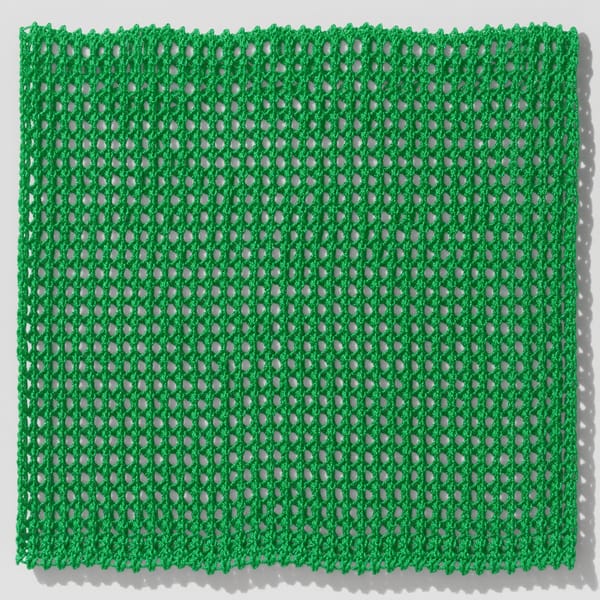
| Weight | 200–320 g/m² (5.9–9.4 oz/yd²) In family: 60–500 g/m² · 5 fabrics |
|---|---|
| Composition | Polyester-based: ~72–82% polyester / 18–28% elastane (spandex); the elastane ratio is tuned to the support level. |
| Knit type | Power net (elastane warp knit) · Raschel |
| Use class | Sport |
| Stretch | 4-way stretch |
| Knit | Made on a Raschel warp-knitting machine: yarns are looped in the vertical warp direction with elastane bound in on every course. This is technically different from the site’s mesh & net family (which is weft/circular knit); warp knitting gives power net high dimensional stability and run resistance. |
| Hand | Firm, full and recovering; smooth flat surface with a clear support feel; stretches 4-way and snaps back strongly. |
| Typical use | Swimwear · corsetry/shapewear · sports lining/support panel |
| Strength | A recovering warp-knit base that combines high support and 4-way stretch with dimensional stability. |
| Watch for | The high elastane ratio makes the fabric firm and less breathable; excess heat/chlorine fatigues the elastane over time. |
Width, gauge, finishing options and test standards are shared on request.
Typical technical ranges
| Weight tolerance | ±5% (typical; the established band for knitted fabrics, warp knits included); on the open structures at the light end of the family (tulle 60–110 g/m²) the same absolute deviation is a larger percentage, so ±5–8% in practice. On elastane power net tension/relaxation state affects GSM — measure on a relaxed specimen |
|---|---|
| Width | OPEN WIDTH ONLY — warp knitting has no tubular form (a structural difference from the weft/circular families). Machine working width typically 130–190 in (≈330–480 cm); after edge trim and stentering, commercial width typically 150–280 cm (260–280 cm at the wide end for tulle and decorative jacquard; 150–190 cm for mesh/eyelet and power net). Final width depends on pattern repeat and draw, confirmed by sample |
| Shrinkage (wash) | Warp knits are DIMENSIONALLY MORE STABLE than weft knits: the warp-locked loops give low relaxation shrinkage. Rigid raschel (tulle · mesh · eyelet · jacquard) typically −1% to −3% length/width after good heat-setting (180–190 °C). Elastane power net moves more: −3% to −5%; with elastane present, heat-set drops to 160–170 °C and excess heat fatigues the elastane and reduces recovery |
| Color fastness | Rigid PES raschel matches disperse-dyed weft knits — wash 4–5; rubbing dry 4–5, wet 3–4; light 4–5; perspiration (acid/alkaline) 4–5. 🔴 POWER NET IS ASSESSED SEPARATELY: disperse dye partitions into the elastane phase and elastane tolerates intensive reduction clearing (RC) less well than PES → wet rub can drop to 2–3 on deep/bright shades. Typical buyer target dry ≥4 / wet ≥3–4; RC quality is decisive. Swimwear use additionally calls for chlorinated-water fastness (ISO 105-E03) |
| Abrasion / pilling | 🔴 MARTINDALE IS NOT MEANINGFUL ON OPEN STRUCTURES — ISO 12947 recognises the “open mesh textile” as its own category; on tulle and mesh, specimen breakdown measures pore geometry rather than surface wear. The governing measures here are BURSTING STRENGTH (ISO 13938-1, hydraulic, 50 cm² area for knits — typically 200–600 kPa on light knits) and SNAG resistance. Pilling is a non-issue on flat-filament warp knits: ISO 12945 typically 4–5 (no staple fuzz). Only the dense power net can be meaningfully Martindale-tested: typically ~20,000–30,000 cycles |
| Gauge / yarn | Raschel machine gauge typically E18–E32, by structure: structural/decorative jacquard and coarse eyelet E18–E24; sport mesh and eyelet E22–E28; fine tulle E28–E32; power net E28–E32 (high-speed raschels that run both elastic and rigid fabric work at these two gauges). Yarn typically 40–150 denier PES filament; 20–50 denier on the finest tulle. Power net binds ~20–70 denier elastane into the PES ground (~18–28% elastane in fabric). In warp knitting yarn is fed FROM THE WARP BEAM, not from cones — beam preparation (warping) is a separate upstream step |
These ranges are industry-TYPICAL / indicative values based on construction and fiber, not Fersan’s binding QC measurements. Exact values are confirmed per order, approved sample and lot-based QC report.
Trade & dispatch
| HS heading | 6004.10 — Knitted fabric, width > 30 cm, ≥ 5% elastomeric yarn |
|---|---|
| Origin | Turkey — Çorlu, Tekirdağ |
| Packaging | Rolls wound on a cardboard core in a PE bag; roll size planned around container fill |
| Shipping documents | Commercial invoice · packing list · A.TR movement certificate · transport document |
| Delivery terms | EXW · FOB · DAP — shipping plan confirmed with your quotation |
The HS heading is indicative; final classification is made by the customs broker based on the sample’s composition, width and finish.
Related reading: Beyond Circular Knitting: Warp Knitting and Weaving · Tricot or Raschel? A Warp-Knit Selection Guide · Warp Knitting’s Hidden Superpower: 3D Spacer Fabric
Related calculators: Warp / beam yarn calculator · Yarn consumption per fabric calculator · Sample weight calculator: from a weighed swatch to g/m² (ISO 3801)
Programmes we use this fabric in: Raschel Warp-Knit Fabric Manufacturer — Turkey · Cycling Jersey Fabric Manufacturer — Turkey · Sports Bra Fabric Manufacturer — Turkey · Swimwear and Beachwear Fabrics
Other fabrics in the same family: Athletic Mesh (Raschel) 160–230 · Tulle / Fine Net 60–110 · Eyelet Raschel 180–280 · Raschel Jacquard 280–500
Frequently asked questions
What weight range is Power Net (Elastane Raschel) produced in?
200–320 g/m² (5.9–9.4 oz/yd²). In family: 60–500 g/m². Weight, composition and color options are defined per request; contact us for samples. The weight ranges are Fersan’s production window; exact figures are confirmed by order and approved sample.
What is Power Net (Elastane Raschel) made of and how is it knitted?
Polyester-based: ~72–82% polyester / 18–28% elastane (spandex); the elastane ratio is tuned to the support level. Made on a Raschel warp-knitting machine: yarns are looped in the vertical warp direction with elastane bound in on every course. This is technically different from the site’s mesh & net family (which is weft/circular knit); warp knitting gives power net high dimensional stability and run resistance.
What is Power Net (Elastane Raschel) used for?
Swimwear · corsetry/shapewear · sports lining/support panel. A recovering warp-knit base that combines high support and 4-way stretch with dimensional stability. The high elastane ratio makes the fabric firm and less breathable; excess heat/chlorine fatigues the elastane over time.
What are the minimum order, lead time and delivery terms?
Minimum order (MOQ): 500–1,000 kg per colour — varies by fabric · Lead time: Typically 3–4 weeks from order confirmation to dispatch · Sampling: Sampling terms are set per project and metreage; it begins after a short technical consultation · Response time: Quotation requests answered within 2 business days · Delivery terms: EXW · FOB · DAP — shipping plan confirmed with your quotation.