Alongside strictly necessary cookies, we use functional and analytics cookies only with your consent. You can choose your preferences and change them any time. Cookie Policy
Cookie preferences
Manage each category separately. Strictly necessary cookies are required for the site to work and cannot be turned off.
NecessaryAlways on
Required for the site’s core functions, security and remembering your cookie preference — including form security (hCaptcha). No consent required.
Functional
Displays embedded content such as Google Maps. When off, the map does not load until you click “Show map”.
Analytics
Helps us improve the site by measuring visit statistics. Currently inactive; when enabled it runs only with your consent.
Manufacturing Programme
Ponte di Roma (Double Knit) Fabric Manufacturer — Turkey
Ponte di Roma stands like woven suiting and sews like a knit. Fersan knits this quality on double-bed machines and dyes it in the same plant. This page explains when ponte is the right call: when the pattern must not move, when seam lines have to read sharply, and when the garment is expected to keep its shape through a season.
Ponte di Roma (Punto di Roma) Double Knit
Weight window80–400 g/m²
CertificatesOEKO-TEX® · ISO
IncotermsEXW · FOB · DAP
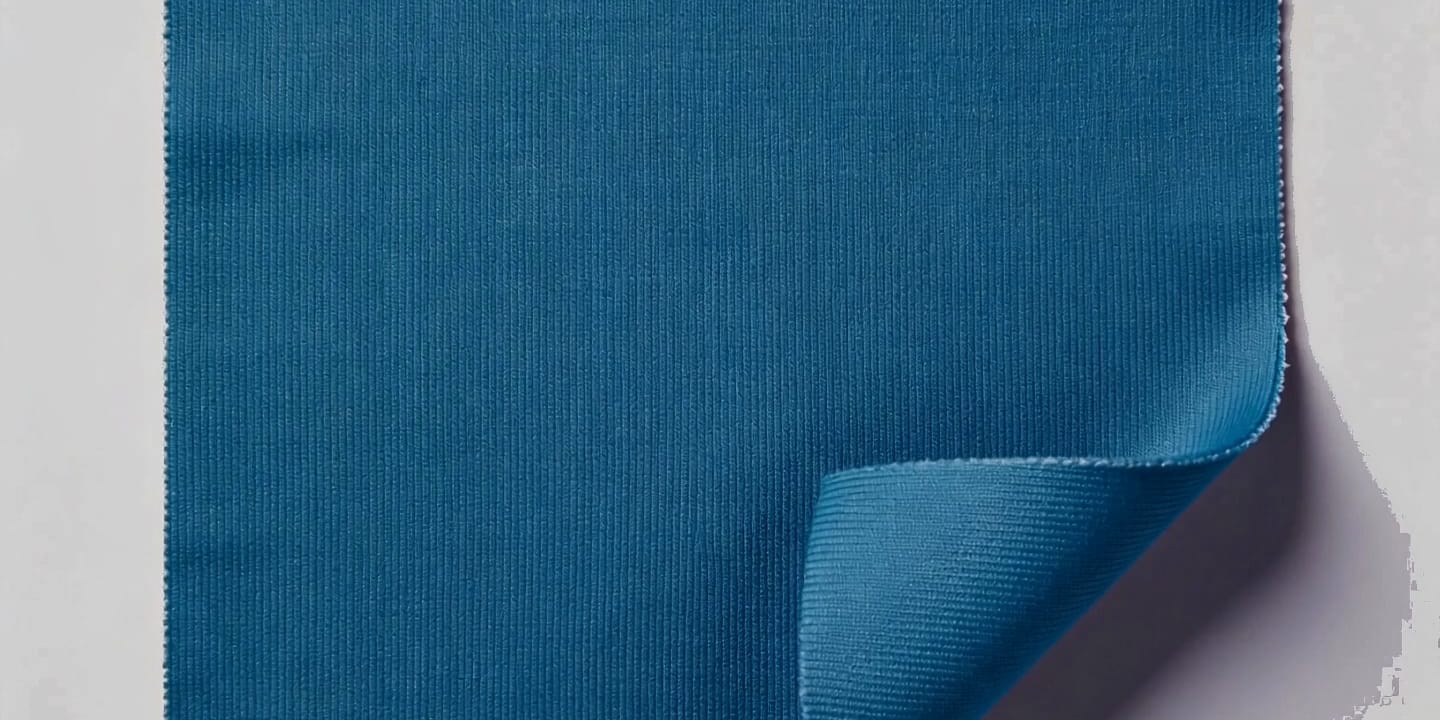
The name is Italian — Punto di Roma — and it points at the construction: a single, thick, stable double-face cloth built on a double bed from a knit plus tuck/miss repeat. It is NOT two layers bonded together; the thickness comes from the knit itself. A faint horizontal rib reads on the surface, both faces are usable, and the cut edge does not curl. Most qualities carry 3–8% elastane, and its purpose is not stretch but keeping the pattern from deforming over a day of wear.
Ponte’s job is to hold the pattern still. Built trousers, blazers, skirts and workwear belong here; it joins the stance of a woven cloth to the comfort and sewing ease of a knit. Its limit shows in pieces that must sit on the body and spring back — bodysuits, leggings, compression: ponte stretches two ways, not four. For that work its sibling scuba is the correct item, and that single sentence decides between these two pages. Fabric width in our standard window runs ~150–185 cm open-width and ~80–100 cm tubular.
Structures neighbouring this programme
01
Ponte di Roma (Punto di Roma) Double Knit
Ponte di Roma double knit
270–360 g/m²
In this application
The core of the programme: a thick, stable, faintly ribbed double-face body — 270–360 g/m².
Composition
Polyester-led; most qualities carry ~3–8% elastane. Market ponte is often rayon/poly-elastane; this file takes a polyester+elastane base.
The item to move to when four-way is needed: flat-faced, springier, for work that sits on the body.
Composition
Polyester base + elastane; typically 5–10% elastane (roughly 90–95% polyester). THERE IS NO FOAM CORE: this is a single-piece knitted scuba. The bonded fabric-foam-fabric “neoprene-look” version is a lamination product and is not part of this programme.
Weight windows come from catalogue data; final specs are confirmed on a sample.
Ordering & Sampling
Minimum order (MOQ)
500–1,000 kg per colour — varies by fabric
Lead time
Typically 3–4 weeks from order confirmation to dispatch
Sampling
Sampling terms are set per project and metreage; it begins after a short technical consultation
Response time
Quotation requests answered within 2 business days
Delivery terms
EXW · FOB · DAP — shipping plan confirmed with your quotation
Capacity
~1,350 t/month knitting + dyeing at the Çorlu mill (since 1982)
Roll
Typically 25–35 kg per roll — varies with weight and order
Figures are typical ranges; exact terms are confirmed with your quotation.
Let us build the pattern behaviour together
In ponte the priority is dimensional stability: knit density, heat-setting temperature and compacting are tuned together so the cloth measures the same on the cutting table and after the first wash. During sampling the critical piece of your pattern — usually the front panel or the trouser front — is trialled at the real weight. Colours are approved by lab dip and shrinkage values are reported after repeated washing.
The link pre-fills the quote form with the fabrics on this page.
Frequently asked questions
Is ponte made by bonding two layers together?
No. Ponte is a single cloth; its thickness comes from a knit plus tuck/miss repeat on a double bed. Nothing is glued or laminated — the “double” in double knit refers to the two identical faces, not to two pieces joined.
Should I choose ponte or scuba?
If the pattern must stay still, ponte: two-way stretch, more stability, a faint horizontal rib. If the garment must sit on the body and spring back, scuba: four-way stretch, a flat face, more give. Blazers and trousers sit on the ponte side, bodysuits and leggings on the scuba side.
Which weight for a blazer?
For built jackets and blazers the 300–360 g/m² band works; shoulders and lapels need that body not to collapse. Skirts and dresses are content at 270–320. Seeing the critical piece sampled at the real weight is more reliable than picking from a table.
Does ponte hold a press?
Polyester-based ponte keeps its shape well after heat-setting, but a sharp press line will not stay as it does on woven wool. Because elastane is present, iron temperature must stay low; excess heat fatigues the elastane and the cloth loses its recovery.
What are the minimum order and lead time?
We work in a band of 500–1,000 kg per colour, and the typical span from approval to shipment is 3–4 weeks. Delivery can be EXW, FOB or DAP, and we answer quotation requests within two working days.