
Bird’s-eye Mesh (mock mesh)
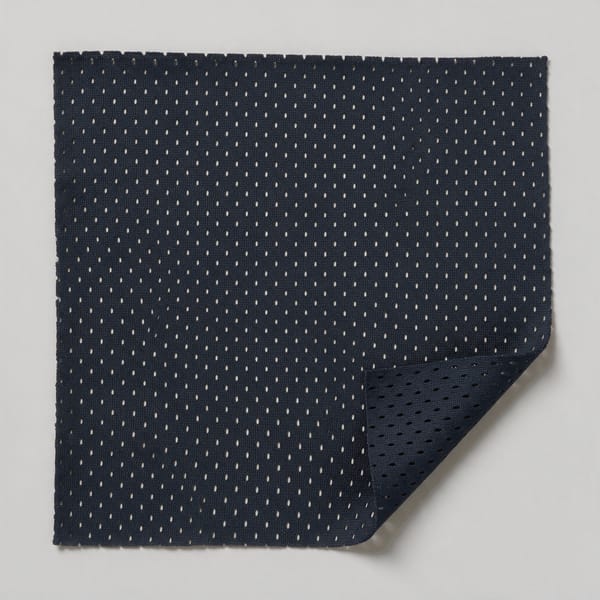
| Weight | 120–200 g/m² (3.5–5.9 oz/yd²) In family: 70–250 g/m² · 5 fabrics |
|---|---|
| Composition | 100% polyester (typical); a ~90–92% PES / 8–10% elastane version exists for stretch. |
| Knit type | Bird’s-eye mesh (mock mesh) · Mesh & Net |
| Use class | Sport |
| Stretch | Mechanical stretch |
| Knit | A textured knit made on a circular weft machine with knit + tuck arrangements forming evenly spaced raised dots / small holes. |
| Hand | Lightly raised, grainy surface; fuller and more structured than sports net, still airy-dry. |
| Typical use | Performance polos/tees · team/corporate sport · training tops |
| Strength | The textured mesh that best balances air permeability with a clean, corporate look. |
| Watch for | Not as cool as full open net; the dot texture can show slight shading in deep colours. |
Width, gauge, finishing options and test standards are shared on request.
Typical technical ranges
| Weight tolerance | ±5% (typical, dense/fine mesh); coarse open sports net and jacquard can run ±5–7% due to hole size/spacing and heat-set width-opening (very coarse builds may locally exceed ±7%) |
|---|---|
| Width | Fersan standard: 160 cm open width (owner-declared, 2026-09-03). Structural reference: open width typically ~150–190 cm; tubular ~30–100 cm. Spacer (double-bed) and jacquard on narrow machines usually sit near the low end. Exact width depends on machine diameter/needle count and finishing/heat-set set |
| Shrinkage (wash) | Up to ±3% after wash (with good heat-set usually ±1–3%); open/loose circular-knit net can reach ±4–5%, mainly lengthwise, with length/width difference being normal. PES has inherently low hygroscopic shrink; the main source is knit-tension relaxation, so it tracks heat-set quality |
| Color fastness | Wash 4–5, rubbing (dry) 4–5 / wet 3–4, light 4–6 (min grade). Disperse-dyed PES is generally good; deep/bright shades can sit near the low end for wet rub and perspiration |
| Abrasion / pilling | Typical Martindale ~15,000–40,000+ cycles; dense/fine builds (bird’s-eye, jacquard, spacer) toward the top, coarse open net toward the bottom (on coarse open net, Martindale over the holes is of limited representativeness). Pilling typically 3–4 (filament PES sheds little fuzz). Main risk is snagging/laddering at large holes — not fuzzy pilling |
| Gauge / yarn | Typical machine gauge ~E18–E28 (coarse sports net E18–E22, fine lining/bird’s-eye mesh E24–E28; spacer double-bed machines are a separate class). Yarn typically ~50–150 denier filament PES; fine microfilament lining mesh 50–75 den, structural/spacer heavier |
These ranges are industry-TYPICAL / indicative values based on construction and fiber, not Fersan’s binding QC measurements. Exact values are confirmed per order, approved sample and lot-based QC report.
Trade & dispatch
| HS heading | 6006.32 — Other knitted fabric, of synthetic fibres, dyedUnbleached or bleached shipments: 6006.31 |
|---|---|
| Origin | Turkey — Çorlu, Tekirdağ |
| Packaging | Rolls wound on a cardboard core in a PE bag; roll size planned around container fill |
| Shipping documents | Commercial invoice · packing list · A.TR movement certificate · transport document |
| Delivery terms | EXW · FOB · DAP — shipping plan confirmed with your quotation |
The HS heading is indicative; final classification is made by the customs broker based on the sample’s composition, width and finish.
Related reading: Mesh and Piqué: Breathable Polyester Knits · Moisture-Wicking Finishing in Polyester Knits · Piqué, Bird’s-Eye and Mesh: The Anatomy of Breathable Polyester Knits · Teamwear Knit Fabrics: The Names Behind Kappa, Damla, Kaz Ayağı and Polymesh
Related calculators: Knit weight calculator: loop length to estimated GSM · Teamwear Fabric Selector — construction and weight by kit part · Roll length calculator: diameter to meters (estimated)
Programmes we use this fabric in: Recycled Polyester Fabric Manufacturer (rPET) — Turkey · Polyester Mesh Fabric Manufacturer — Turkey · Polyester Bird’s-eye Mesh Fabric Manufacturer — Turkey · Dry-Fit and Moisture-Wicking Fabric Manufacturer — Turkey · Football Jersey Fabric Manufacturer — Turkey · Mesh Lining Fabric Manufacturer — Turkey
Other fabrics in the same family: Sports Net / Eyelet Mesh 100–170 · Breathable Micro Mesh (lining) 70–130 · Spacer (3D sandwich) Mesh 180–250 · Jacquard Mesh 150–250
Frequently asked questions
What weight range is Bird’s-eye Mesh (mock mesh) produced in?
120–200 g/m² (3.5–5.9 oz/yd²). In family: 70–250 g/m². Weight, composition and color options are defined per request; contact us for samples. The weight ranges are Fersan’s production window; exact figures are confirmed by order and approved sample.
What is Bird’s-eye Mesh (mock mesh) made of and how is it knitted?
100% polyester (typical); a ~90–92% PES / 8–10% elastane version exists for stretch. A textured knit made on a circular weft machine with knit + tuck arrangements forming evenly spaced raised dots / small holes.
What is Bird’s-eye Mesh (mock mesh) used for?
Performance polos/tees · team/corporate sport · training tops. The textured mesh that best balances air permeability with a clean, corporate look. Not as cool as full open net; the dot texture can show slight shading in deep colours.
What are the minimum order, lead time and delivery terms?
Minimum order (MOQ): 500–1,000 kg per colour — varies by fabric · Lead time: Typically 3–4 weeks from order confirmation to dispatch · Sampling: Sampling terms are set per project and metreage; it begins after a short technical consultation · Response time: Quotation requests answered within 2 business days · Delivery terms: EXW · FOB · DAP — shipping plan confirmed with your quotation.