Alongside strictly necessary cookies, we use functional and analytics cookies only with your consent. You can choose your preferences and change them any time. Cookie Policy
Cookie preferences
Manage each category separately. Strictly necessary cookies are required for the site to work and cannot be turned off.
NecessaryAlways on
Required for the site’s core functions, security and remembering your cookie preference — including form security (hCaptcha). No consent required.
Functional
Displays embedded content such as Google Maps. When off, the map does not load until you click “Show map”.
Analytics
Helps us improve the site by measuring visit statistics. Currently inactive; when enabled it runs only with your consent.
Manufacturing Programme
Teamwear Fabric Manufacturer — Sports and Corporate Kit Knits, Turkey
Fersan Tekstil is a vertically integrated polyester knitted fabric manufacturer in Çorlu, Turkey; the teamwear programme supplies every surface of a kit collection — body, panels, collar and lining — from one mill. We work at 500–1,000 kg per colour and ship typically 3–4 weeks after order confirmation.
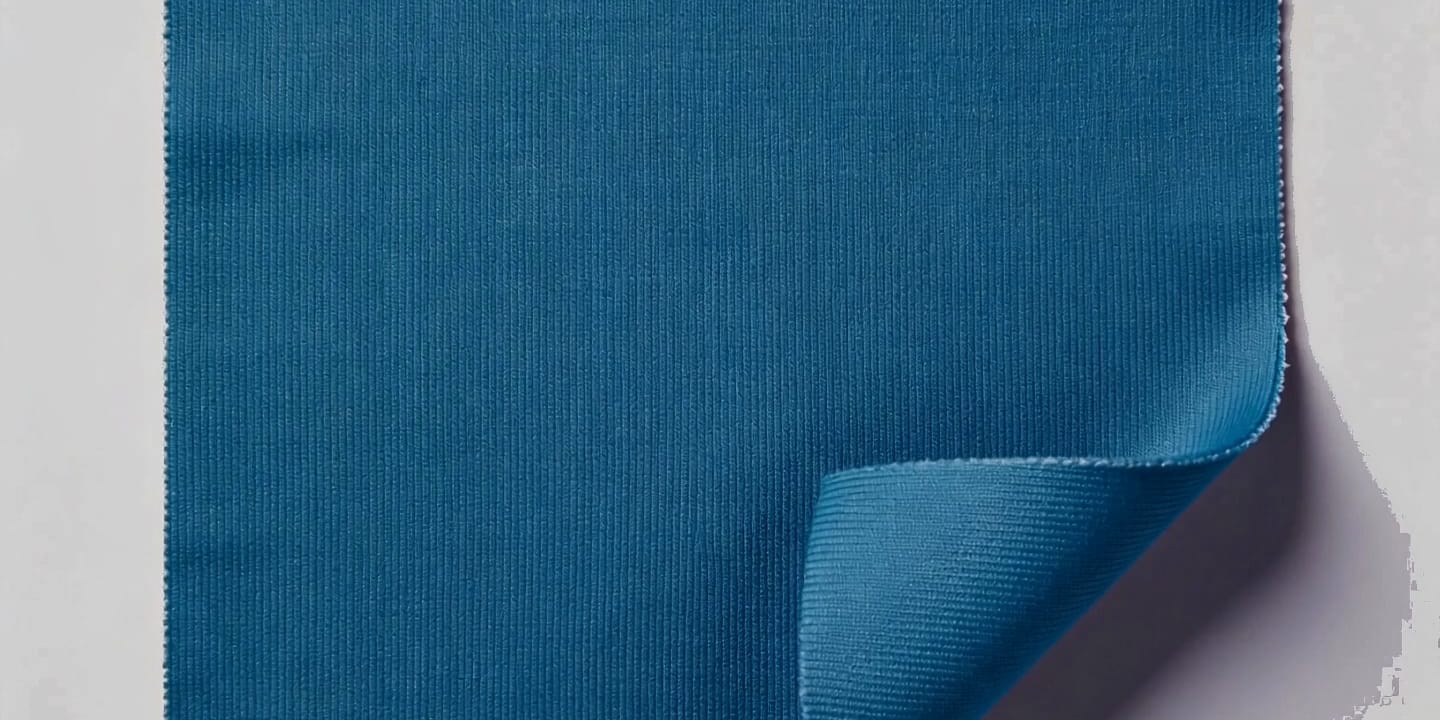
Polyester Interlock
Weight window80–370 g/m²
CertificatesOEKO-TEX® · ISO
IncotermsEXW · FOB · DAP
Teamwear fabric is not the name of one cloth; it is a use category covering every knitted polyester face that goes into sports and corporate kit. The Turkish market calls those faces kappa, damla, kaz ayağı and polymesh — trade names rather than knit names, and the same name gets applied to the output of two different machines. Our programme ties each market name to the construction behind it: kappa is a microfilament flat face on either a jersey or an interlock base, damla is perforated sports net, kaz ayağı is dotted bird’s-eye mesh, and polymesh is the whole net family.
The body, side panels, collar and lining of one garment each want a different face, and taking them from one supplier keeps colour consistency and lead time on a single calendar. The same line runs from a club collection to a teamwear manufacturer’s seasonal programme, and from a corporate work tee to a school kit. We produce for Western European and Russian/CIS markets and work regularly to the test standards of European sports and apparel brands.
The surfaces we knit in this programme
01
Polyester Interlock
Interlock (double-knit)
80–260 g/m²
In this application
The double-bed base of the closed face the market calls kappa: opaque, stable, non-curling, and the crispest ground for sublimation.
Weight windows come from catalogue data; final specs are confirmed on a sample.
Ordering & Sampling
Minimum order (MOQ)
500–1,000 kg per colour — varies by fabric
Lead time
Typically 3–4 weeks from order confirmation to dispatch
Sampling
Sampling terms are set per project and metreage; it begins after a short technical consultation
Response time
Quotation requests answered within 2 business days
Delivery terms
EXW · FOB · DAP — shipping plan confirmed with your quotation
Capacity
~1,350 t/month knitting + dyeing at the Çorlu mill (since 1982)
Roll
Typically 25–35 kg per roll — varies with weight and order
Figures are typical ranges; exact terms are confirmed with your quotation.
We work from a spec sheet, not a market name
What shortens the sampling round is not the name but the spec: construction, weight window in g/m², composition and elastane share, the finish expected, and whether the ground is to be prepared for sublimation. We fill those five lines with you; colour is approved by lab dip, and perspiration and wash fastness plus dimensional stability are reported per order. We answer enquiries within two working days. Below the 500–1,000 kg per colour window, trial yardage is considered only for development projects and is discussed separately.
The link pre-fills the quote form with the fabrics on this page.
Frequently asked questions
What is the minimum order for teamwear fabric?
It runs 500–1,000 kg per colour, with the exact figure settled in the quotation according to the fabric and the shade. Planning the collection around home and away colours uses that threshold efficiently; trial yardage for development projects is discussed separately.
Which of your fabrics correspond to kappa, damla and kaz ayağı?
Kappa is not a construction but a microfilament family: its single-bed leg is microfiber jersey and its double-bed leg is polyester interlock. Damla is perforated sports net, kaz ayağı is dotted bird’s-eye mesh, and polymesh is the whole net family. Every card carries its catalogue weight window.
Which weight should I choose?
The part decides. A match jersey body takes 120–200 or 130–220 g/m², side panels 100–170 g/m², a training top 80–260 g/m², corporate and school kit 120–200 or 150–280 g/m², linings 70–130 g/m². Send the product brief and we narrow the band together.
Are the fabrics ready for sublimation printing?
Yes — a polyester ground is the natural chemistry for sublimation and pale grounds are prepared for print. Sharpness depends on how flat the face is: closed faces carry the crispest report, while on an open net the motif breaks along every hole, so the artwork is built for it or the print moves onto the closed panels.
Does corporate and school kit come out of this programme too?
Yes. On the sports side the hole opens and the weight drops; on the corporate side the face closes and the weight rises — two bands of one family. For corporate work tees, school kit and polos, bird’s-eye mesh and piqué constructions lead.
Do you produce on a recycled (rPET) base?
Yes — the same constructions are knitted from GRS-certified rPET yarn, and production runs on OEKO-TEX STANDARD 100 certified inputs. Certificate scope and the test reports you need are written into the quotation.