
Quality Control
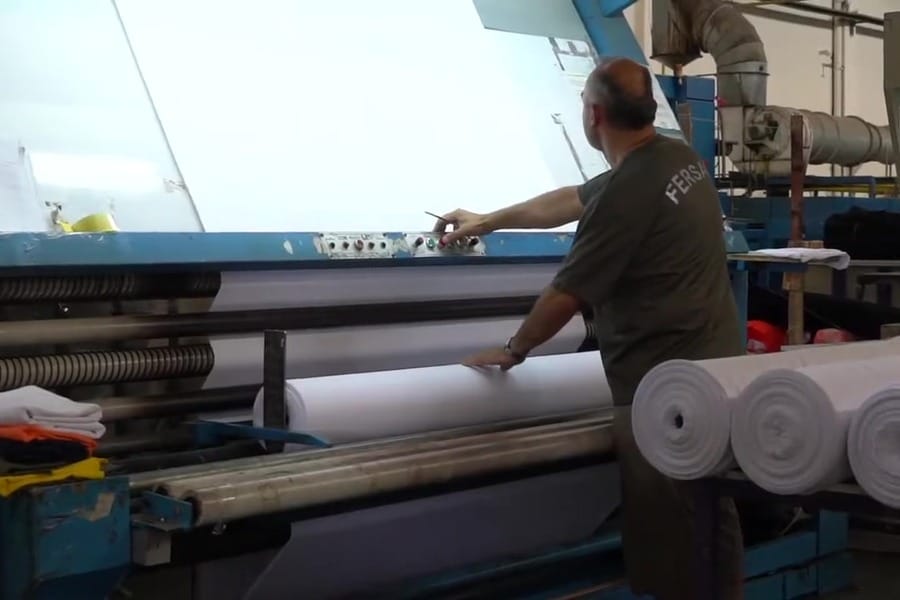
Our in-house control runs 24/7; quality control stays in our own hands, never outsourced.
We do not outsource quality control. We are one of the few firms that run their own in-house inspection; the checking is done in our own laboratory, working 24/7. The record of each batch — from the machine to dispatch — stays with us.
A sample is pulled, measured and assessed; a batch that passes is delivered to the customer with Fersan’s assurance, and a batch that does not is taken off the line. The call rests on the measured result, not on production pressure.
The point is not to hunt for faults, but to catch a defect before it reaches the customer. When we sign off a batch, we also know whose hands stand behind it.
| Quality control rate | 90% |
|---|---|
| Inspection | In-house, our own team |
Related guides: Knit Quality Testing: What to Measure in Polyester · Knit Defects: Spirality, Barré and Holes — Root Cause and Control · The Whole Polyester Chain in One Table: Typical Engineering Ranges
Questions about this unit
Is «bursting ≥ X kPa» enough in a specification?
No, because the test area changes the result directly: measured over 7.3 cm² instead of 50 cm², the same fabric returns a higher kPa simply because the smaller area contains fewer weak points. The area (preferably 50 cm² for knits) and the method — hydraulic ISO 13938-1 or pneumatic ISO 13938-2 — must therefore be fixed together. The result is reported as kPa alongside distension in mm.
From the guide: Knit Quality Testing: What to Measure in Polyester
Is «C06 ≥ 4» a complete fastness criterion on its own?
No, the variant code is missing. ISO 105-C06 offers several wash severities, and the code defines the temperature (A = 40 °C, B = 50 °C, C = 60 °C), the number of steel balls (1 = none, 2 = one ball) and whether bleach is included (S = standard, M = with bleach). Colour change is also graded on the grey scale SEPARATELY from staining onto the multifibre adjacent strip; on deep, bright disperse shades wet crocking (X12 wet) is usually the hardest item to pass.
From the guide: Knit Quality Testing: What to Measure in Polyester
What is the root cause of spirality and how is it controlled?
The root cause is usually the yarn’s RESIDUAL TWIST TORQUE: in single-cylinder jersey that torque skews the course lines away from the right angle after washing and shows up as seam displacement. Four levers: balanced or set yarn with S/Z balance, moving to a double-plate structure, stenter heat-setting, and measurement — AATCC 179 / ISO 16322.
From the guide: Knit Defects: Spirality, Barré and Holes — Root Cause and Control
Why is barré the most insidious defect?
Because it usually only becomes visible AFTER DYEING. It has two root causes: yarn-side (mixing lots that differ slightly in denier, twist or IV) and tension- or machine-side. Control is single-lot yarn discipline plus positive storage feed — Memminger-IRO/BTSR/LGL deliver a constant yarn length to every loop, which reduces both tension-driven streaking and dropped stitches.
From the guide: Knit Defects: Spirality, Barré and Holes — Root Cause and Control